
Founded in Geneva in 1996 in association with the Council of Europe, FEDRE(www.fedre.org)has always focused on cross-border regions. In 2023, it formed a partnership with Crédit Agricole next bank to study the border effect around Switzerland. Following Issue 1, which addressed food aid; Issue 2, the challenges facing the healthcare sector; Issue 3, water; Issue 4, focused on culture; Issue 5, on unemployment benefits for cross-border workers; Issue 6 focused on the idea of a cross-border resident card,the next on sustainable mobility in cross-border urban areas, Issue 8 on the European aspects of cross-border cooperation, Issue 9 on the diversity of tax systems for cross-border workers, Issue 10 on Switzerland’s unique approach to counting the unemployed, No. 11 on sustainable transport planning in border regions, No. 12 on the contribution of culture to a shared identity, No. 13 on the growing importance of cross-border phenomena, No. 14 on the role of sports in cross-border relations, No. 15 on democracy in cross-border regions, on the 16th, cross-border forest resources; on the 17th, associations of cross-border workers; on the 18th, the future of mobility in cross-border areas; on the 19th, “Greater Geneva”; on the 20th, agriculture in the Franco-Geneva region; and today, the 21st, the challenges of the Fourth Industrial Revolution.
The Limits of Reactive Action
The main purpose of cross-border cooperation is to overcome certain obstacles caused by the existence of a border. It identifies problems and, with varying degrees of success and at a varying pace, attempts to implement solutions in various areas: first, the flow of cross-border workers; then mobility; a bit of land-use planning; a bit of environmental protection; a bit of the economy; and tomorrow, perhaps health or social cohesion, or training and even education….
The issues addressed are almost always highly technical and are further complicated by the actual differences in the design, organization, and functioning of public authorities in France and Switzerland, compounded by differences in legislation and regulations.
The behind-the-scenes work of ants, led by a handful of specialists with little real or meaningful involvement from the general public, the media, key economic players, or the nonprofit sector, and with few spectacular breakthroughs to showcase… in short, what cross-border initiatives sorely lack is the ability to inspire people.
This is because cross-border cooperation essentially operates on a reactive basis, seeking solutions after the fact—which is positive but insufficient, as it lacks the element of foresight. Yet this is crucial for staying ahead of events rather than falling behind them.
Dreams and Innovation
In his once-famous writings, the Swiss and European writer Denis de Rougemont highlighted the vital importance of dreams in the future of societies:
“The difference between the dream and the reality of history is, above all, a matter of timing. Most of humanity’s dreams have come true over the ages—flying, going underwater, walking on the Moon, communicating over great distances, killing from afar without risk, seeing what is not there, hearing Mozart or Bach, or the voices of one’s deceased parents simply by pressing a button” (The Future Is Ours, 1977, p. 355).
It is dreams, not necessity (economic or otherwise), that drive technological innovation:
“It was the dream of flight that gave birth to the airplane, not the anticipation of the economic, tourist, and military benefits that aviation would one day bring. The story of Icarus’s flight is the tale of a dream that almost everyone has had at one time or another.” (Culture and Technology, 1961)
Dreams shape utopias in the human imagination that one day come true. That is their social function. And what inspires dreams can evoke both fear and desire. Technological innovation is closely linked to dreams.
Today, it is the so-called Fourth Industrial Revolution (4.0)—with the transformations it brings to our lives and our very beings—that likely best embodies this connection between innovation and dreams that can become reality. Rather than lagging behind and rushing to catch a train the day after tomorrow that will already be in motion, why not start preparing for it right now?
The Cyber-Industrial Revolution: Coming Soon to the Paris-Geneva Region?
Back in the 1980s, plans were drawn up for what was known as a “technopole” based in Archamps, which was intended to serve as a driving force for cross-border cooperation between France and Geneva, specifically in the field of innovation.
Now known asArchParc, Archamps certainly lives on, but the dream of 40 years ago—championed in particular by the mayor at the time (1965–2000), Raymond Fontaine, and by Roland Pascal, a graduate of the École Nationale d’Administration who served for 27 years as head of the administration of the Haute-Savoie General Council (where he directed operations until 2010), has hardly come to fruition, at least if judged by the standards of the original ambitions.
Today, however, theFourthIndustrial Revolution calls on us to set similar goals, though undoubtedly using different means. This would add a much-needed extra dimension to the cross-border cooperation taking shape in what is known as “Greater Geneva”—and, if possible, extend it even further.
But where do we start? And where can we look for relevant examples that could be applied in our region?
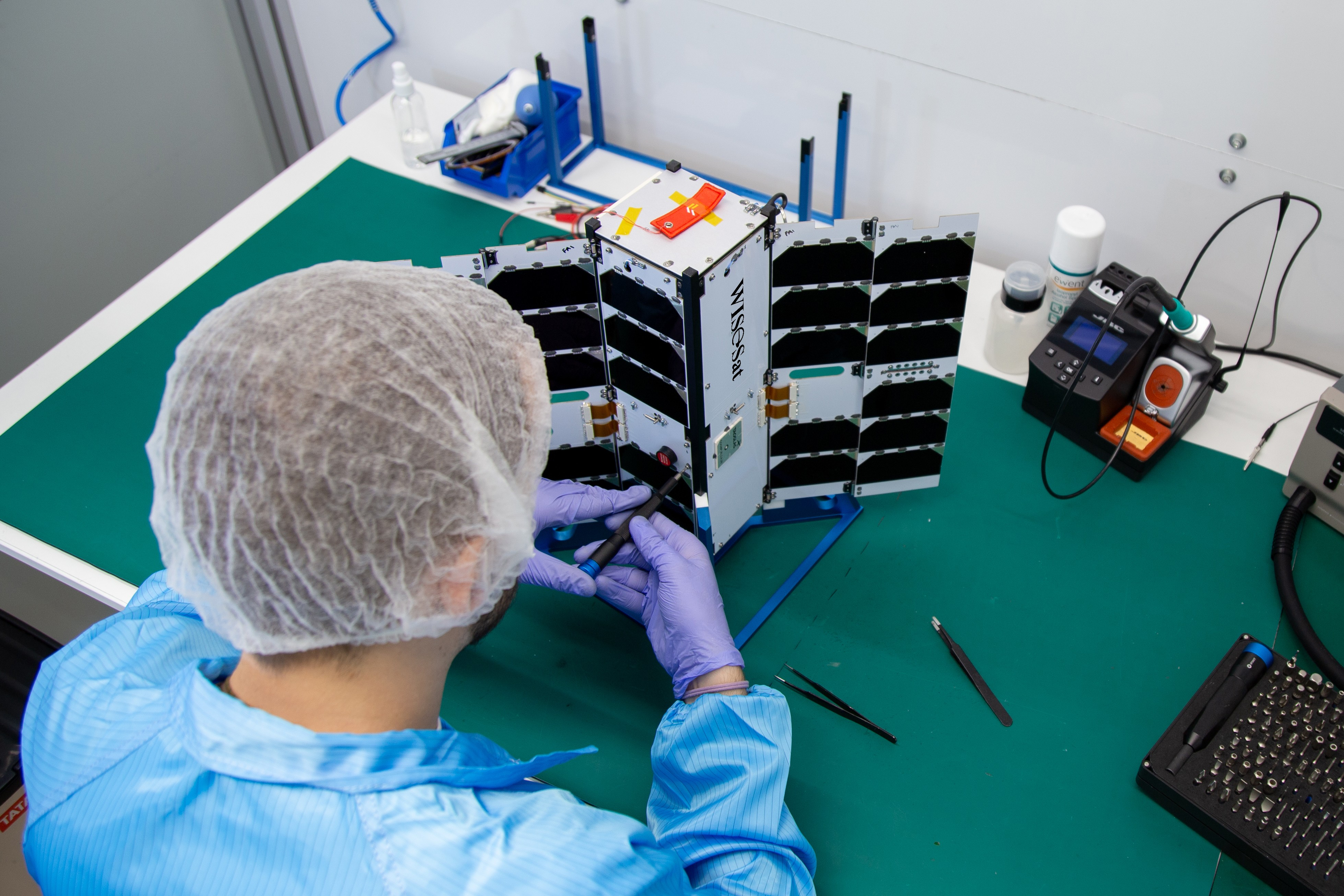
There is an example in Europe that should inspire us. It is the very recent cooperation betweenGibraltarand the neighboring Andalusian town ofLa Línea de la Concepción, particularly in the fields of AI, blockchain, cybersecurity, quantum computing, the Internet of Things (IoT), and space technologies. It should be noted that several Geneva-based companies and foundations, notably WISeKey and OISTE, are leading this initiative, which is far more than just a project… simply because it is already being implemented (see here).
So why not dream a little? We could consider setting up something on the border with the Pays de Gex, just a stone’s throw away and working closely with CERN and international organizations. This should be possible, and it would give the region a whole new dimension, at a time when “International Geneva” is being called upon to reflect on its future potential.