A city mountain
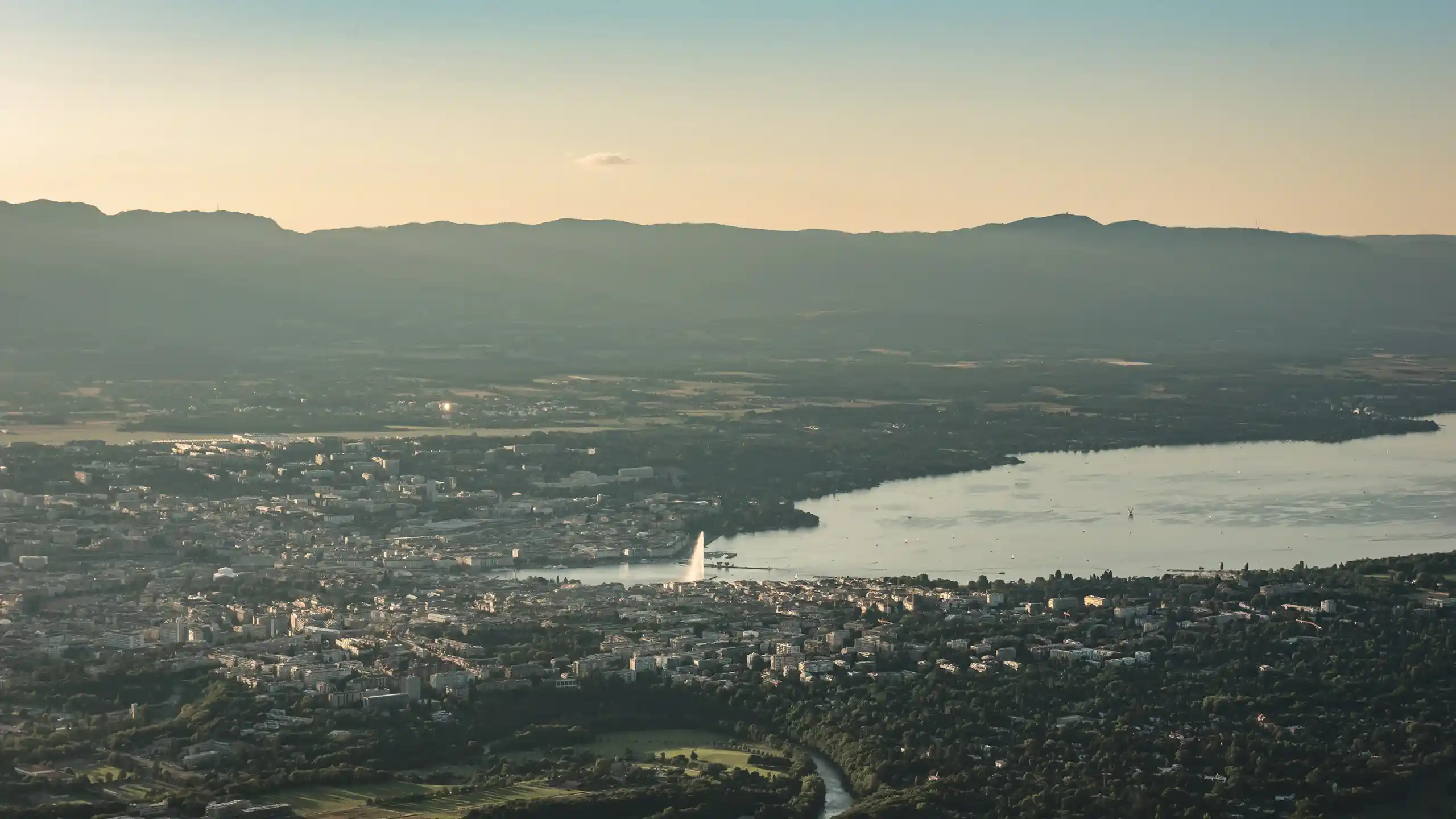
Visitors can enjoy hiking, rock climbing, cross-country skiing, sledding, and paragliding, and stay overnight thanks to the growing range of hotels and tourist accommodations. The exceptional panorama that the Salève offers over the Geneva Plain to the Jura Mountains, and over the Alps to Mont Blanc, as well as its natural diversity, are its main tourist attractions. For many naturalists of that era, it also served as a prime observation site (geology [2], paleontology, entomology, and botany, among others), which earned it the reputation as the most studied and described mountain in the world.
A landscaped park
It can thus be viewed as a vast landscaped park, the management of which must aim not only to highlight its natural and cultural potential, but also to address the conflicts that may arise among its various users (particularly residents and visitors).
In fact, depending on whether weather conditions are favorable or unfavorable, waves of hikers, picnickers, and athletes flood the summit of Salève. The high variability of these flows and their tendency to concentrate in both time and space characterize these activities, causing traffic jams on the two access roads to the summit and a sense that the mountain range is being overrun (illegal parking). On the other hand, the growth of recreational activities and private transportation following improvements to road infrastructure has led to the decline of facilities such as the cable car.
FEDRE has not only worked to ensure the cable car’s survival, but has also spearheaded concrete initiatives to promote sustainable transportation on the Salève, such as by introducing free shuttle buses for hikers and outdoor enthusiasts.
1. Indeed, many Swiss cities have this kind of relationship with a mountain: Lugano with San Salvatore; Bern with the Gurten; Zurich with the Uetliberg; Neuchâtel with Chaumont.
2. Among the most famous was H. B. de Saussure (Journey through the Alps, 1779–1796), for whom the Salève served as a laboratory for Alpine geology.
3. J. Burgener, 1988
The Landscape Directive
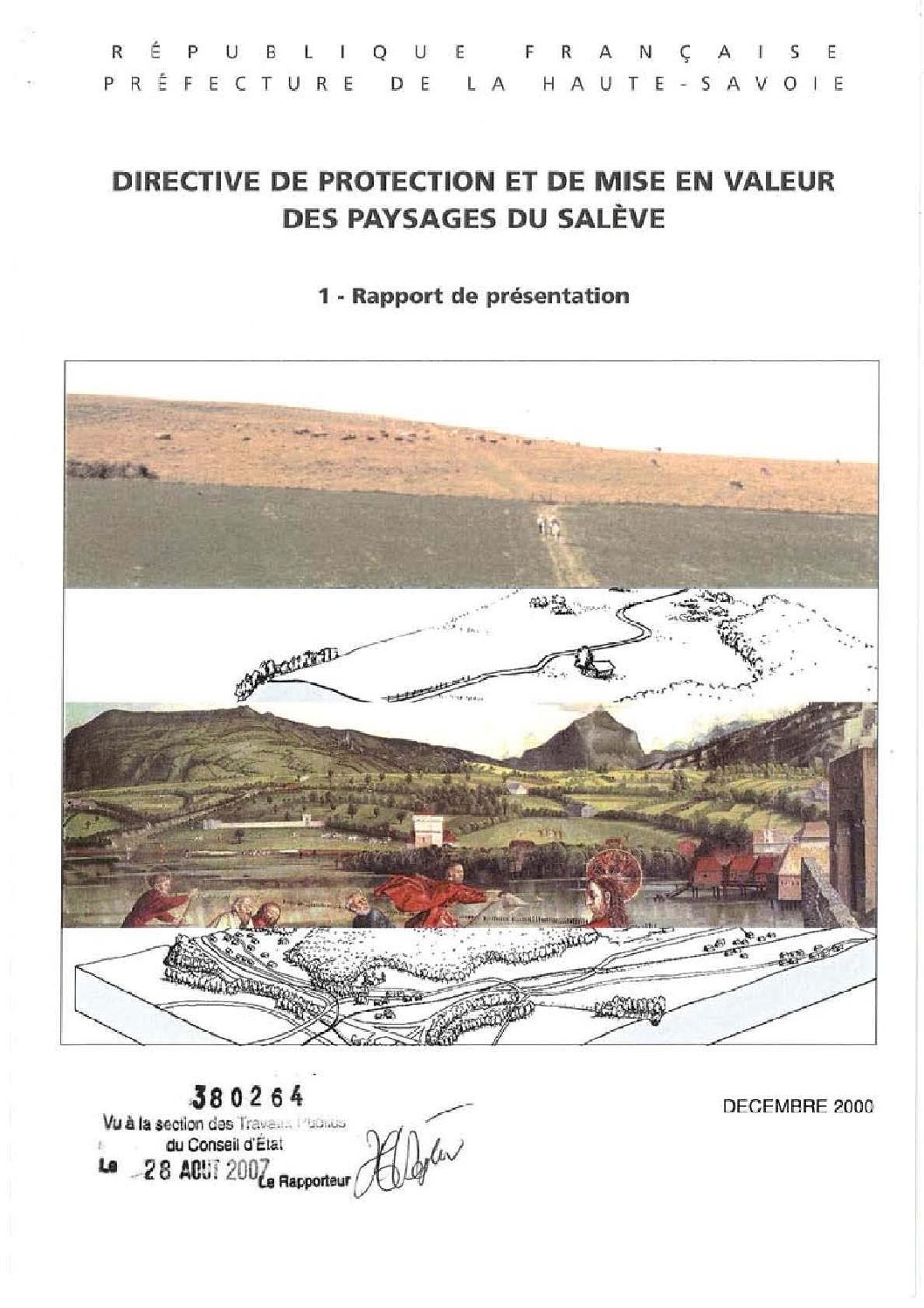
The directive ensures that the Salève remains a natural and pastoral area, with no further construction permitted except for limited development at La Croisette. Forest management, road maintenance, and urban planning in the foothills must ensure that views of the mountain range—the landscape’s defining features—are preserved. Similarly, no new quarries may be established, and existing ones may not be expanded.
2002 International Year of Mountains
The growing attention paid to mountain issues prompted the UN General Assembly to designate 2002 as the International Year of Mountains. Subsequently, UN Member States chose December 11 as the date to celebrate International Mountain Day, beginning in 2003.
The origins of the day date back to 1992, when the document “Management of Fragile Ecosystems: Sustainable Mountain Development ” (also known as Chapter 13) was adopted as part of the Agenda 21 action plan of the Conference on Environment and Development.
Natura 2000
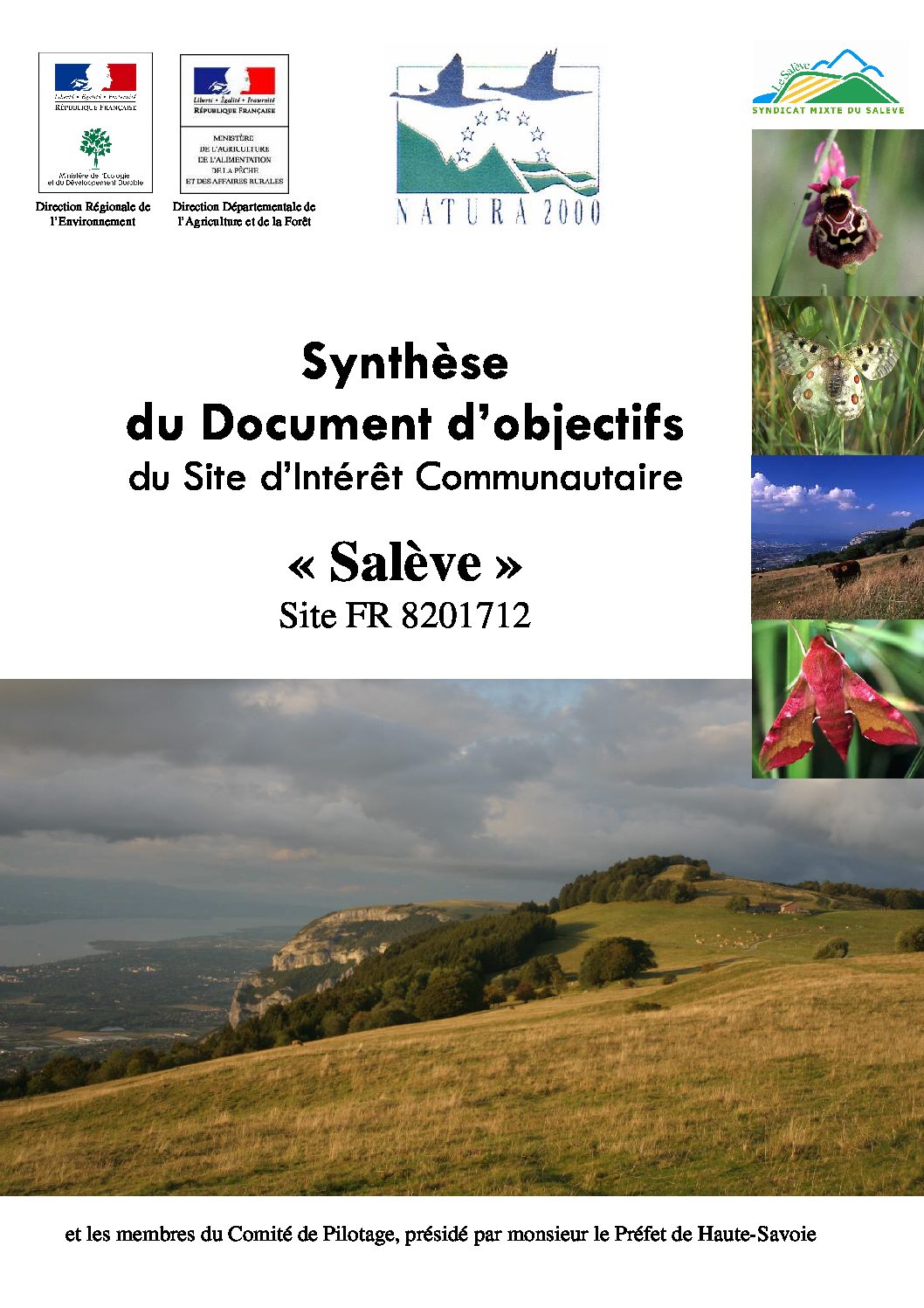
To preserve biodiversity, the European Union has created a network of natural sites called “Natura 2000.” The Salève has been part of this network since 2003, as it is home to 17 natural habitats (beech forests, dry grasslands, peat bogs, cliffs, caves, etc.) and 10 species (crested newt, lady’s slipper orchid, greater horseshoe bat, etc.) that are rare at the European level. To preserve this heritage, no additional regulations are planned. The Syndicat Mixte du Salève, together with farmers, foresters, and landowners, carries out management work funded by the European Union and the French government: clearing dry grasslands with orchids, dredging and creating ponds for amphibians, maintaining and creating forest clearings for bats, and cutting back vegetation to expose Lady’s Slippers…
In addition, twelve farmers have signed an agri-environmental and climate measure (AECM) in which they commit to limiting fertilizer use, delaying mowing dates, and preserving some thorny shrubs during brush-clearing operations to promote biodiversity. Finally, inventories of flora and fauna are being conducted to better understand the rare species of the Salève. For example, we now know that there are not eleven but twenty-three species of bats inhabiting the Salève!
All projects requiring authorization within the Natura 2000 area (local urban planning, construction of a forest road, sporting events, etc.) must undergo a prior impact assessment. Finally, the Natura 2000 charter, signed by landowners, operators, or voluntary users, commits them to preserving Natura 2000 habitats and species in exchange for property tax exemptions for the former.