
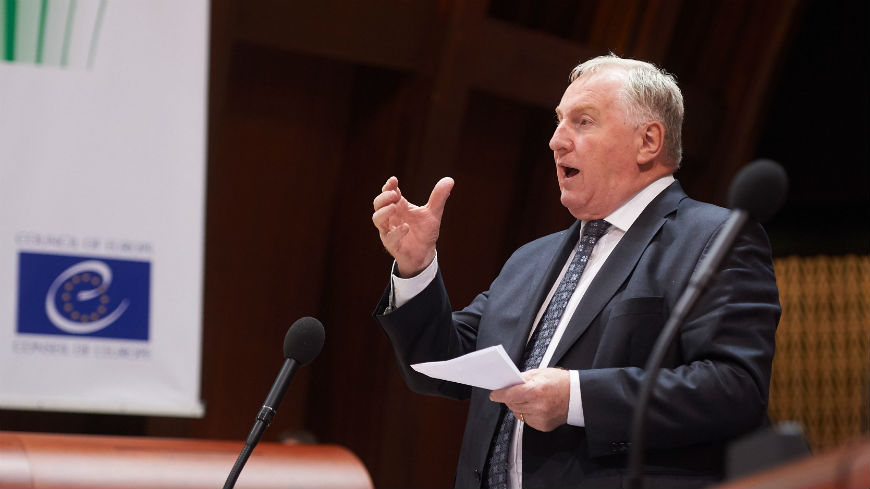
“Cross-border work and the free movement of labor across borders are a vital aspect of European cooperation and integration,” said Karl-Heinz Lambertz (Belgium, SOC), rapporteur, at the 37th Congress Session in Strasbourg (France) on October 29, 2019. “To prevent this from causing fiscal disparities between regions on either side of borders and thereby undermining territorial cohesion, it is essential that taxes be distributed fairly between workers’ places of employment and places of residence,” he said.
The report titled “Fair distribution of taxes in cross-border areas: potential conflicts and possibilities for compromise” points out that, since there is no common policy among Council of Europe member states, cross-border workers pay their taxes in the countries where they work, not where they live. “This creates a winner-loser situation, in which local and regional authorities on one side of a border benefit from the exchange at the expense of their counterparts on the other side,” he explained. These shortcomings are particularly noticeable in certain border regions where the financing of public services is woefully inadequate as a result of taxes being collected only in the country of employment.
In the adopted report, the Congress calls on local and regional authorities in the places where cross-border workers are employed to distribute tax revenues fairly, to use them locally to improve the quality of life, and to contribute to the financing of the local public services used by workers in their places of residence. At the national level, a better-coordinated multilateral dialogue needs to be established in order to harmonize the criteria for taxation and burden-sharing in cross-border regions.
“In the case of Luxembourg, where there are not enough housing units to accommodate all cross-border workers, more than 200,000 people cross the border every day, with all the environmental consequences that entails. Soon the number of cross-border workers will be double the country’s population, a situation that is not sustainable,” explained Dominique Gros, Mayor of Metz, in his speech.
“The various stakeholders in Europe’s cross-border regions must work together as partners to achieve shared goals,” said Claude Haegi, former President of the Congress and President of the Foundation for Economy and Sustainable Development of the Regions of Europe (FEDRE), citing the example of the influx of French cross-border workers into the city of Geneva in Switzerland. “The tax fairness proposed in this report is essential if we are to move forward with meaningful projects that meet people’s expectations,” he concluded.
Dominique Gros’s speech (available only in French)