
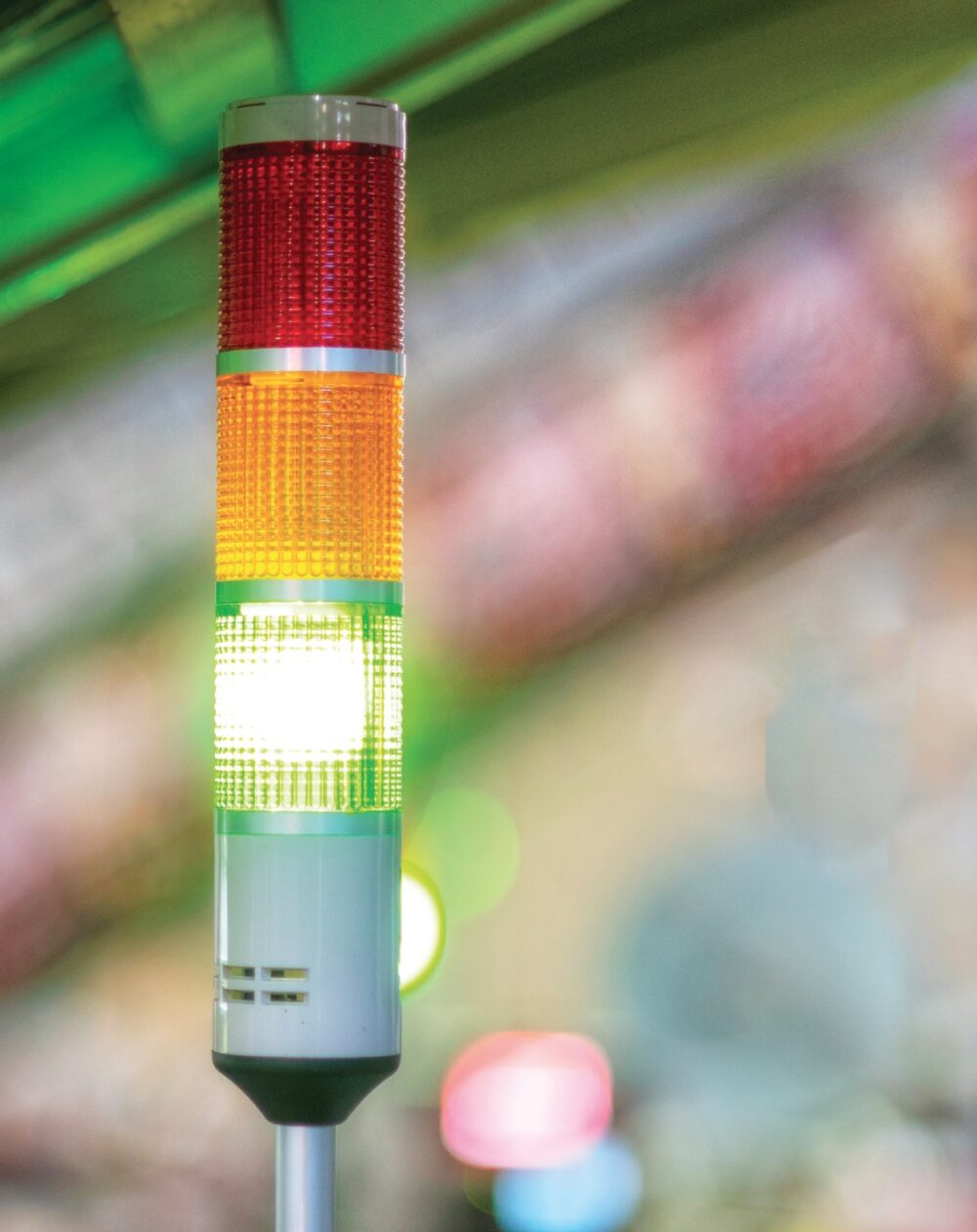
Industrial companies are incorporating climate change into their strategic plans and making environmental sustainability a key performance driver… Reducing environmental impact is no longer an option; it is being addressed at various levels.
According to a survey conducted earlier this year by the NooS.Global platform, 42% of the 3,000 French business leaders surveyed (ranging from large corporations to very small businesses) are successfully engaging their employees and customers in their CSR (corporate social responsibility) and ESG (environmental, social, and governance) strategies*. While the responding companies express a desire to do much more, only 41% plan to improve by the end of 2022.
The survey highlights differing views on the fear that climate change will disrupt their business operations. More than a third (36%) of mid-sized companies and 41% of large companies believe that global warming will have an impact and express serious concerns about it. Among micro-enterprises, 45% and among small and medium-sized enterprises (SMEs), 57% consider the risk to be moderate to low, with a less alarmist outlook on these issues.
However, only large companies with 5,000 or more employees report having a comprehensive CSR-ESG strategy in place for more than 50% of their operations by 2022. Mid-sized companies are on track, with 39% currently developing such a strategy. Among small and medium-sized enterprises (SMEs), 36% have yet to define a strategy, and 47% of very small businesses admit they have nothing in the works.
Nature worth preserving
In reality, in Haute-Savoie, trends are clearly moving toward greater consideration of global warming. First, because the department—and in particular the Arve Valley—has been deeply concerned about air and water quality for years. When it comes to protecting aquatic environments, for example, the Syndicat mixte d’aménagement de l’Arve et de ses affluents (SM3A) works in partnership with businesses and professional organizations such as the SNdec as part of the “Arve pure” project, in collaboration with the Water Agency and local authorities, to limit the impact of industrial activities and, in particular, the discharge of pollutants.
But manufacturers in Haute-Savoie are also working to reduce their CO2 emissions because the sharp rise in energy costs has highlighted the urgent need to develop a more energy-efficient industry. Beyond that, these eco-friendly practices serve as a mark of quality for clients who are beginning to incorporate environmental requirements into their specifications, as well as a key factor in attracting new talent in a market where recruitment is extremely challenging. Within the workshops, significant progress has been made toward creating a more eco-responsible industry, with high-performance ventilation systems to purify indoor air and protect employee health, while preventing the release of pollutants outdoors.
Numerous waste management initiatives have also been implemented to process and recycle waste, particularly machining chips. This is in addition to efforts in the area of mobility, thanks to initiatives such as Mobil’Arve—designed to address the challenges outlined in the air quality prevention plan—and the GreeN network—which brings together around 100 companies to take collective action within the framework of CSR policies. We should also mention the work carried out in collaboration with Cetim on issues related to optimizing the transport of parts and machinery for bar-turning companies.
A series of actions
Company leaders are addressing these issues and are taking advantage of new construction projects in particular to implement innovative technologies. One example is Carbilly, in Saint-Pierre-en-Faucigny, a subsidiary of the Pracartis Group (see ÉcoMéca 94), which has invested over 3 million euros to construct an energy-efficient building and equip it with a cutting oil filtration system, install solar panels on the roof, and set up extraction systems with a capacity of 30,000 m³ per hour to remove oil mist and dry dust, and then reuse the recovered heat to warm the workshop in winter.
Arcom Industrie has opted for an innovative technology to cool its workshop (see opposite). Small and medium-sized businesses also have big ambitions, such as Gaston-Perrollaz in Magland (see ÉcoMéca 95), which, when expanding its building in 2018, took the opportunity to refurbish its air system, install a new, more energy-efficient compressor, and improve water treatment and consumption. As a result, kilowatt-hour consumption has been reduced by 37% since 2016, and CO2 emissions have been cut by 27 tons per year. CEO Jean-Luc Moënne-Loccoz has even purchased the land next to the factory to create a shared vegetable garden with his employees and plans to install solar panels in the near future.
At Damso, the mowing of green spaces has been entrusted to the sheep from Savoy Paysage. These few examples (and there are others in Haute-Savoie) demonstrate that many initiatives can be undertaken at various levels with a single goal: to limit the environmental impact for the well-being of employees, management, and the local community. And thus ensure the sustainability of industrial activity.
*ESG criteria take into account CO2 emissions, electricity consumption, waste recycling, the quality of labor-management relations, the employment of people with disabilities, employee training, transparency in executive compensation, anti-corruption measures, and the representation of women on boards of directors.
Sandra Molloy
See also:https://theshiftproject.org/article/rapport-final-decarboner-lindustrie-ptef/
Read the full article in theJune 2022 issue ofEcoMeca.
EcoMeca June 2022
PDF 3.22 MB