About Us
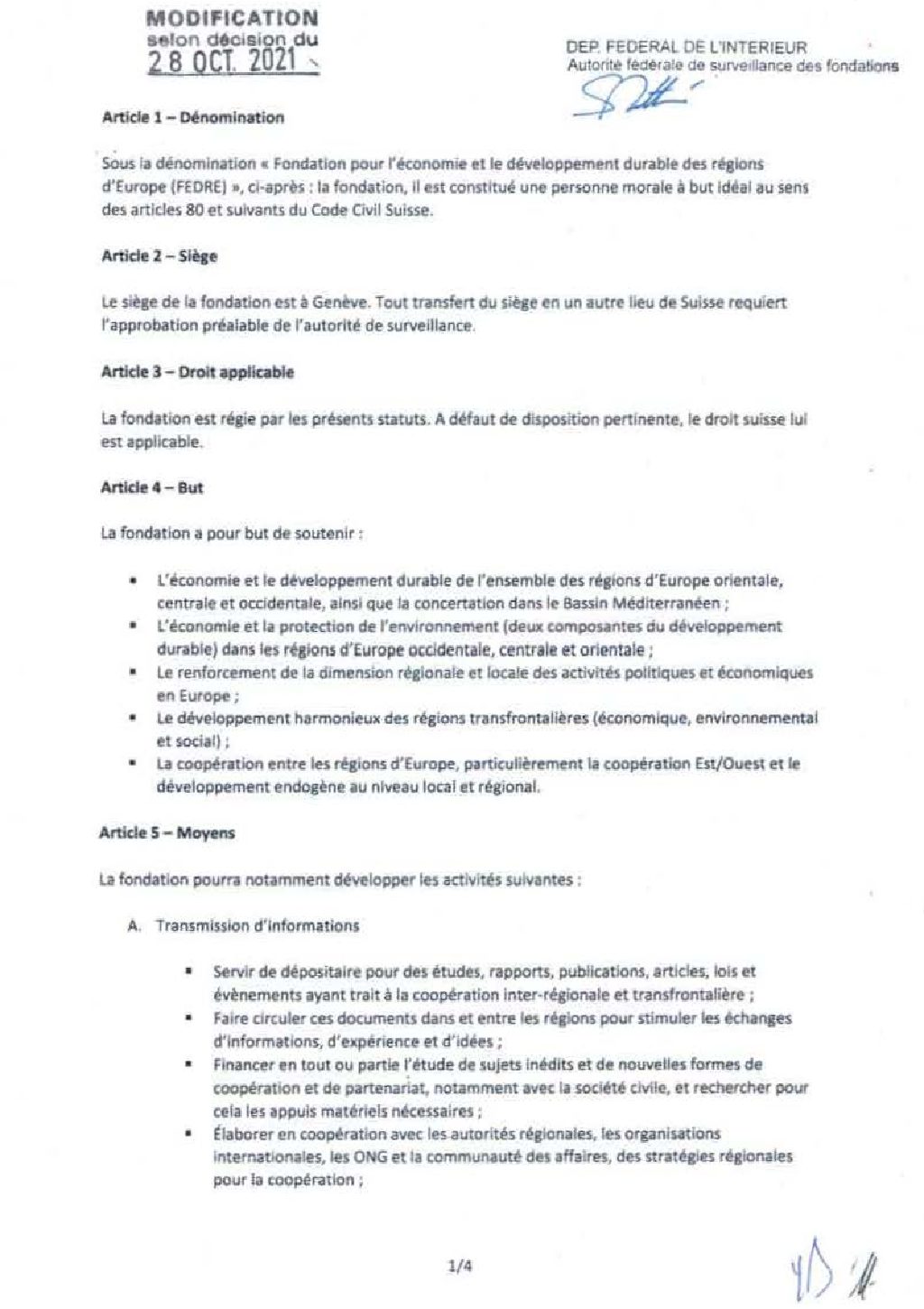
We are an offshoot of the Congress of Local and Regional Authorities of the Council of Europe (CLRAE), whose mission—as defined when we were established in 1996—is to serve as a bridge between political and economic actors in support of sustainable development and its economic, environmental, and social components.
The issues we address are examined from both a regional and a European perspective.
Which Territories?
Our scope of action, which varies depending on the issues addressed, covers the whole of Europe. However, we were initially very active in Eastern Europe following the fall of the communist regimes, helping to raise awareness of the importance of preserving the natural environment, which had been severely neglected.
A significant portion of our work also focuses on the Franco-Italian-Swiss cross-border region known as the “Alpine Diamond,” stretching from Geneva to Lyon and Turin, with a particular emphasis on the Lake Geneva and Alpine regions of the Swiss cantons and French departments.
On issues related to taxation and cross-border relations, we have worked on a report focusing on the corridor that connects many cross-border workers between Belgium and France, Luxembourg, the Regio Basilensis, the French departments of Jura and Alpes, and Geneva.
This topic has other applications across Europe.
What kind of urban development and architecture?
What kind of architecture do we want?
: creative, innovative, soothing, and energy-efficient architecture that makes use of appropriate materials, particularly wood.
Geneva, Lyon, and Turin, the major cities of the Alpine Diamond, boast significant architectural heritage alongside modern developments. The region’s many other cities are also rich in history and creativity and can rival the largest ones. But let’s focus here on the three international cities mentioned above.
Alongside Turin’s Baroque splendors, architect Renzo Piano has given the cultural and tourism sectors the iconic Lingotto building (formerly FIAT). Let us highlight the process of transforming brownfield sites into modern spaces.
World-renowned for its Renaissance architecture, the Vieux-Lyon district owes its superb state of preservation to the Malraux Law (1962), which protects the site.
Since the Part-Dieu complex was built in 1977, Lyon has seen a proliferation of iconic modern buildings, including Jean Nouvel’s Confluence district, the Orange Cube and Green Cube designed by Jacob and Marc Farlane, and the Cité Internationale, where Renzo Piano’s work can be found.
Geneva boasts a rich architectural heritage. It features Roman ruins, as well as medieval and Baroque buildings. The city is defined by its historic center, the Old Town, with its medieval and Renaissance buildings. Modern architecture is characterized by elegant simplicity, functionality, and a commitment to environmental sustainability.
The petal-shaped Maison de la Paix, the Biotech Research Campus, the towers in the new Praille-Acacias-Vernets neighborhood, the Opale residential tower, the Pictet Bank tower in the same neighborhood, and several buildings in the watchmaking industry are breathing new life into Geneva’s sustainable architecture.
Our priorities
In recent years,
has focused on certain topics, including:
Energy
This major issue has economic, social, and environmental dimensions that FEDRE has been addressing since its inception, notably by promoting the diversification and improvement of energy sources and their impact on the climate. The goals of Coop 21 in Paris must be upheld. Despite efforts to reduce energy consumption, new developments such as the advancement of artificial intelligence (AI) will cause electricity demand to skyrocket. Realism demands that we respond to this challenge.
Mobility
On May 19, 2025, FEDRE, in partnership with Crédit Agricole next bank, organized a conference and panel discussion on the theme “Toward a New Approach to Mobility,” highlighting a social transformation that goes beyond the mere issue of infrastructure. To introduce this topic, an extraordinary figure was needed: Daniel Goeudevert, former director of Volkswagen and an environmentalist ahead of his time with a down-to-earth economic perspective, addressed the subject.
In response to his remarks, a roundtable discussion chaired by Claude Haegi, president of FEDRE, was convened, featuring Christophe Castaner, president of the Société des Autoroutes et Tunnel du Mont-Blanc, Pierre Maudet, cantonal minister of mobility; Sabrina Cohen-Dumani, executive director of the Nomads Foundation; Mathieu Fleury, CEO of Léman Express; and Vincent Scattolin, mayor of Divonne-les-Bains and vice president of the Pôle Métropolitain du Genevois français.
A summary of this conference—which, among other things, challenges the myth of the car’s indispensability and emphasizes the complementary nature of all public and private transportation options—will be posted on this site shortly.
Forestry and Wood Industry
Between 35 and 40 percent of Europe’s land area is covered by forests that provide essential environmental, protective, and economic benefits. Through its partnership with Woodrise International, Fedre has access to a wealth of information on forest management and the uses of wood.
Our long-standing collaboration with Lignum Geneva and Lignum Switzerland has led us to organize major promotional events in support of forests and wood.
To ensure sustainable forestry, it is essential to work within local networks—from the forest to wood processing and its end use—with a regional and cross-border perspective. Wood is an underutilized material in construction in general, even though it contributes to well-being and has a positive impact on CO₂ sequestration. Promoting the wood sector, from forestry to manufacturing, is one of FEDRE’s top priorities.
Forests, which often straddle national borders, are generally underutilized for primarily economic reasons, even as we import timber from distant sources.
How can we make their management more attractive?
What are the market opportunities?
What competition exists?
Why does processing often have to take place far from the production site (secondary processing)? What can be done to encourage investments that cover the entire supply chain?
Water sector
Freshwater bodies (lakes, rivers, wetlands) account for only a small fraction of Europe’s total land area, while the continent is increasingly facing droughts affecting more than half of the territory by the summer of 2025. Glaciers, a major source of water, are melting.
Climate change is causing an increase in disasters for which we must prepare and limit .
As a member and partner of the Evian Water Cluster, FEDRE supports its activities. Together, they organize several events and initiatives.
Distribution of Tax Revenue
In cross-border areas, taxation is a sensitive issue on which we have taken a stance and are actively driving the debate at the European level.
The report adopted by the Congress of Local and Regional Authorities of the Council of Europe on the equitable distribution of taxation in cross-border regions was a source of satisfaction for FEDRE. Indeed, acting as an an expert, FEDRE was able to share and deepen its knowledge of the subject, which it continues to monitor.
Wage disparities, particularly between Luxembourg and its Belgian, French, and German neighbors—or even more markedly between France and Switzerland—are causing a drain on the labor force. Nevertheless, this workforce should not abandon the country that trained it merely because it partially resolves the issue of unemployment. This study is being conducted in collaboration with various cross-border authorities and organizations.
This approach is not limited to taxation; it also encompasses social benefits for cross-border workers.
Culture
FEDRE considers culture to be a fundamental element of regional identity that is inextricably linked to economic issues. Among other partners, it collaborates with the European Centre for Culture and the Denis de Rougemont Foundation for Europe. Major projects are in the works.
A New Democratic Pact for Europe
This project is a response to the erosion of democracy and aims to strengthen democracy, the rule of law, and human rights by making institutions more effective.
This initiative must engage local and regional authorities and stakeholders who can influence its success.
Measures

The magaregional and cross-border magazine:
“L’Extension– Diamant Alpin”is our partner. It is published four times a year, plus a special issue titled “La frontière en chiffres.” Its editorial content provides deeper insights into the region, covering the economy, the environment, culture, and entertainment. We offer perspectives from both France and Switzerland, along with examples from across Europe.
Our information and awareness-raising efforts regularly utilize print and television media, social media, targeted communications, and the organization of events.
We regularly highlight various outstanding businesses located on both sides of the border.
Training
The need for skilled workers is a key issue in both France and Switzerland. FEDRE is engaging in discussions with industry professionals to identify highly innovative, collaborative courses of action.
Cross-border meetings between economic stakeholders
FEDRE is actively working to raise awareness—particularly of outstanding sites that are home to little-known global leaders just across the border—and to understand how their respective systems operate
Communication
Print media
The magazine , now known as “L’Extension Diamant Alpin,” is consolidating its new editorial focus, which centers on the various aspects of sustainable development and the defined cross-border region.
Its distribution network has now expanded on both sides of the border, thanks to a new partnership and regional agreements.
Audiovisual
In terms of audiovisual content, the Diamant Alpin website features documentaries and interviews produced in collaboration with, and notably by, Aftermedia-Europe (France-Switzerland) and the Pourparlers association (Turin). Partnerships are being developed with regional television stations.
Directory of European Regions
Produced by FEDRE in partnership with the Chamber of Regions of the Congress of Local and Regional Authorities of the Council of Europe (decision adopted in Strasbourg on July 4, 2003),the Yearbook of European Regions provided geographic, demographic, and economic data on more than 700 European regions.
Foundation Board and Partners
Claude Haegi, President
; President and/or board member of various foundations, associations, and companies; former President and Member of the Government of the Republic and Canton of Geneva; former Mayor of Geneva; Honorary Member and former President of the Congress of Local and Regional Authorities of the Council of Europe.
François Saint-Ouen, Secretary General
Secretary General of the European Center for Culture and the Denis de Rougemont Foundation for Europe. He has taught at several universities in Switzerland and France, focusing in particular on the issue of a Europe of the regions
Laurent Wehrli, Board Member
Member of the Swiss National Council, member of the Foreign Affairs Committee, the Control and Management Committee, and the Swiss delegation to the Inter-Parliamentary Union, former mayor of Montreux.
Émilie Bonnivard, Associate Member
Member of the French National Assembly representing Savoie, member of the Law Commission. Regional Councilor for Auvergne-Rhône-Alpes
Yves Berthelot, Honorary Member of the
, former Deputy Secretary-General of the United Nations and Executive Secretary of the United Nations Economic Commission for Europe (UNECE).
Daniel Goeudevert, Honorary Member of
; speaker and writer. Former Vice President of the Volkswagen Group and former Chairman of the Executive Board of the Volkswagen brand, as well as of Ford and Renault Germany. Former Vice President of Green Cross International, chaired by Mikhail Gorbachev.
Experts
Michel Rivoire, an engineer and urban planner, is the former director of urban planning for the City of Lyon and the Lyon Urban Community, as well as for Transalpes (the Lyon-Turin-Savoie Transalpine Link), Technolac, and BioMérieux Real Estate. He has managed social and industrial programs in France and its overseas territories.
Andi Gjonej, Advisor on Development and Cooperation, former Ambassador.