MOBILITY CULTURE
“Today, there are more and more spaces where crowds coexist, yet people do not interact with one another. Individuals are isolated, and from this perspective, these spaces are precisely non-places—that is, spaces of communication, circulation, and consumption. If we wanted to study something truly new, to ask new questions, we would have to start here: with the concept of relationship. This is the true ‘contemporary utopia.’”
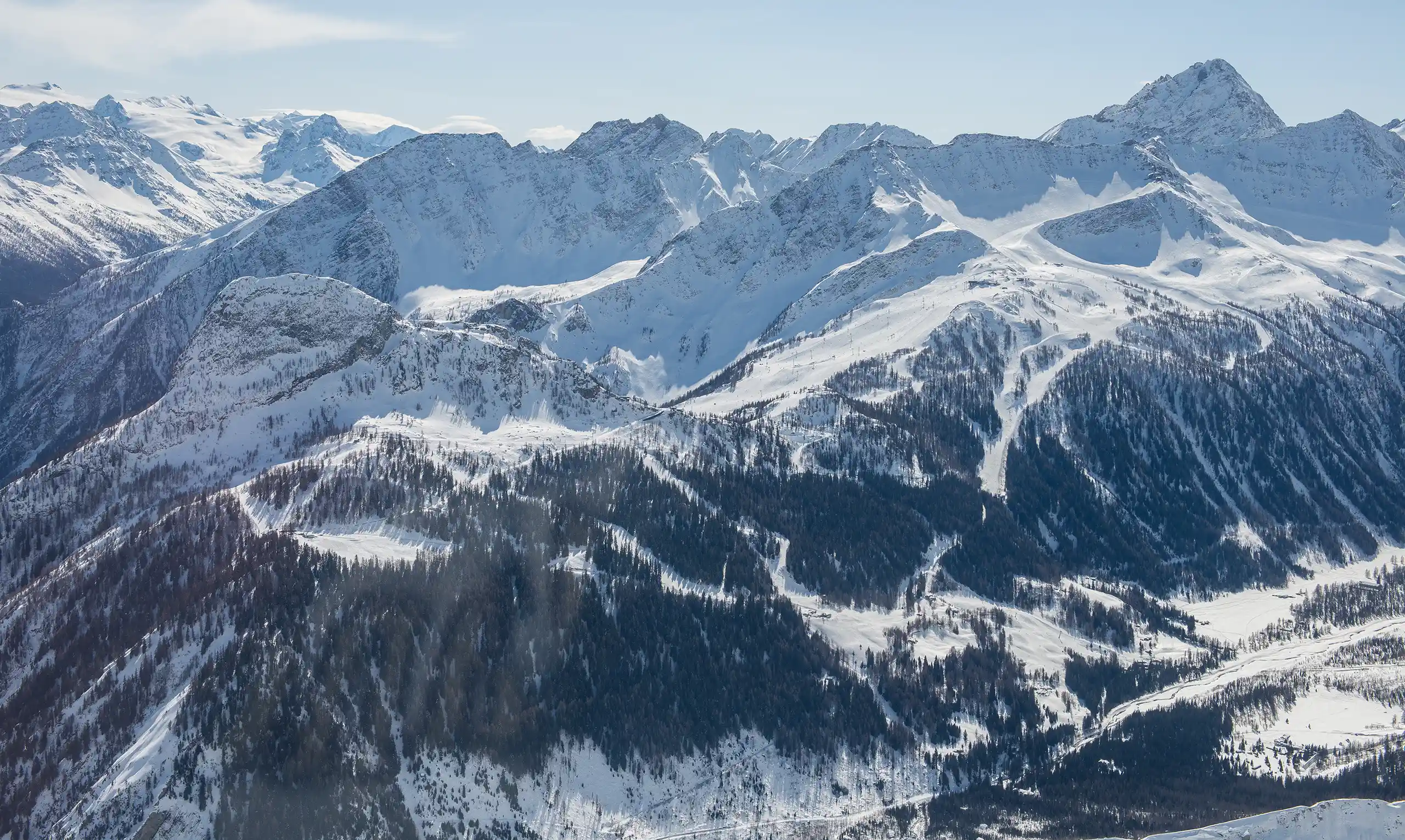
As the renowned anthropologist Marc Augé noted in a discussion on the future of the Alpine barrier (Perché l’Europa esista, Milan, 2014), he highlighted the major challenge facing the regions and communities that are geographically and culturally at the heart of Europe, even though the Alps are often on the periphery of national policies and major continental strategic decisions. And the issue of mobility, along with sustainable development and innovation, lies at the heart of the challenge for the future of the Alps.
Mobility is, above all, a cultural phenomenon. Anthropologist Edward Tylor (1871) provided the widely accepted definition of the concept: culture consists of what people think (religion, law, ethics), what they do (the customs and habits of a community), and what they produce. So why do we travel? To have cultural experiences, attend events, play sports, visit cultural or natural sites, enjoy wellness offerings, discover local cuisine and wines, and go hiking (notably the two most famous ultratrails in the world, the Ultra-Trail du Mont-Blanc and the Tor des Géants).
There are infrastructure projects that make it possible to explore attractive destinations, such as the Skyway in Courmayeur (the eighth wonder of the world, according to the people of the Aosta Valley) or the Montenvers–Mer de Glace train. But the bulk of transportation relies on facilities such as Alpine rail and road tunnels, rail lines, highways, and new greenways…
At a conference on the concept of borders and boundaries (Tra i Confini, 2007), Marc Augé wrote: “We know today that there is no triumphant path to development. Global consciousness is a doubly unfortunate consciousness, both ecologically and socially.” It is in his essay devoted specifically to mobility (Toward an Anthropology of Mobility, 2009) that he highlights a phenomenon that has changed, perhaps for the long term: “We can do everything without moving, and yet we move.”
The world is split in two: major cities, megacities, and industrial districts are attracting people, while rural areas are becoming depopulated or emerging as new destinations of choice. On the one hand, people are moving because they are forced to; on the other, they are doing so by choice. The Diamant Alpin region has experienced both phenomena: the first (constant depopulation) for centuries, the second (second homes, or even primary residences) for several decades. There are two sides to this story: the redevelopment and repopulation of marginal rural areas (for example, in the Great St. Bernard Valley, the Susa Valley, the Arve Valley, and the Valais) and the reduction of seasonal fluctuations in the main trendy tourist resorts.
Over the past thirty years in the Aosta Valley, while the resident population of the central valley and the mountains has grown, that of the mid-valley region—which is generally agricultural in character—has declined. Mobility has played an important role in the development of resorts such as Courmayeur and Chamonix. But innovation is also a key factor: in Switzerland, it is estimated that the installation (currently under study) of solar panels along nearly all of the country’s railways would generate more than 1 TWh of electricity per year.
In a book based on a conversation between two economists from the Aosta Valley, Andrea Farinet and Massimo Michaud (Il Sogno valdostano, 2008), Michaud—then CEO of AXA—wrote about the future of the Aosta Valley and the regions surrounding Mont Blanc: “It is not enough to simply stop and look at what we have; we must work on it. To do so, we must keep these six ‘A’s in mind: Air, Water (Acqua), and Food, which are the concrete and fundamental ‘A’s of the environment that we must care for. Then we have three ‘A’s’ of individual initiatives based on people’s attitudes: Love of nature, Hospitality, and Soul.” The soul is the intangible ecosystem of the Alpine Diamond. Without a soul, infrastructure is nothing more than black lines on a white sheet of paper.
CULTURAL MOBILITY
Until the 19th century, mountain dwellers were portrayed by the European bourgeoisie as underdeveloped beings, people of limited intellect, if not suffering from endemic cretinism. Even nature did not always inspire great enthusiasm. Hegel, visiting an Alpine glacier, wrote: “There is nothing grand or pleasant about such a view.”
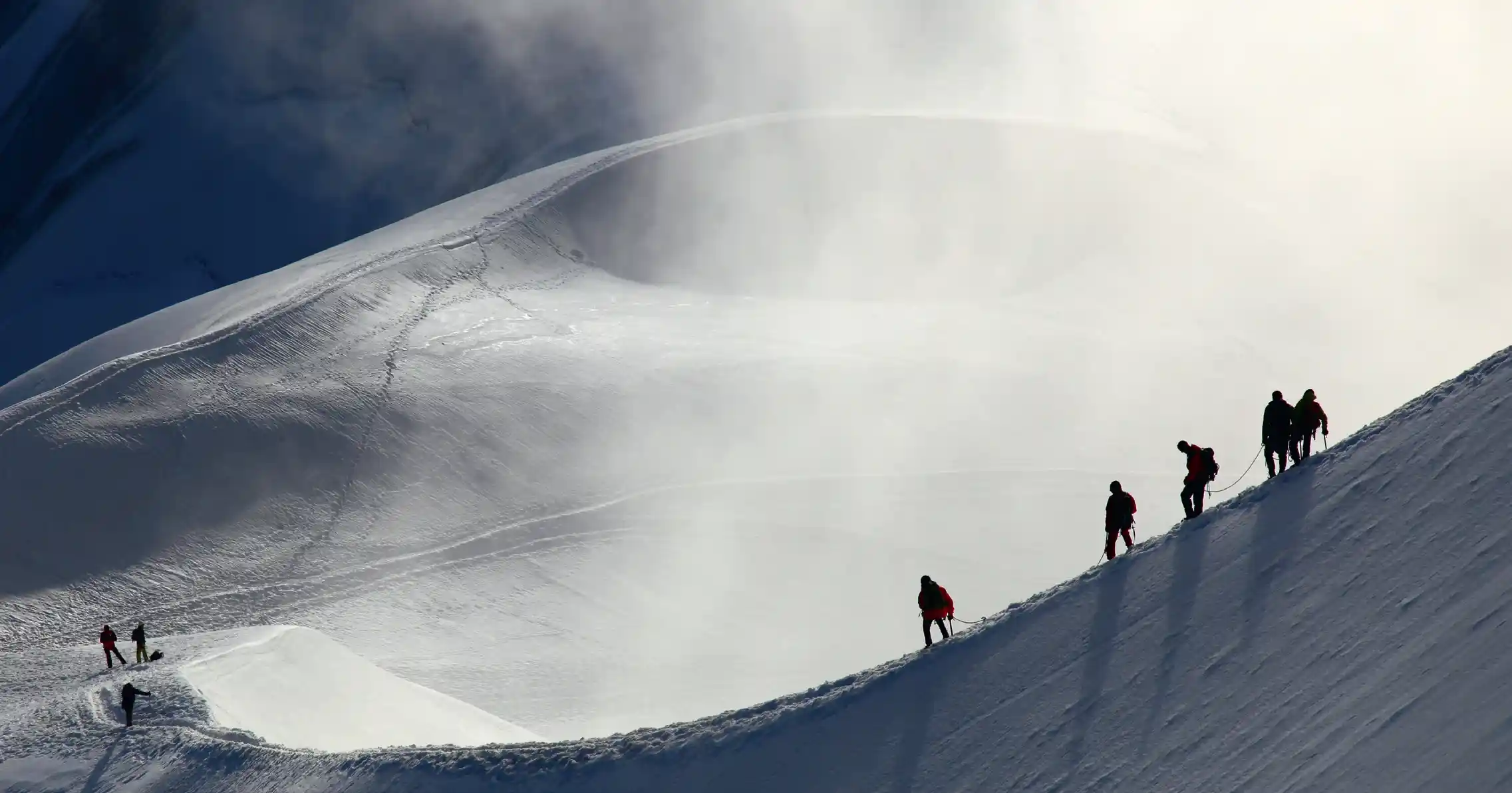
Yet the world of mountaineering changed 236 years ago, when Jacques Balmat and Michel Gabriel Paccard, both natives of Chamonix, became the first to conquer Europe’s most famous peak. Shortly thereafter, still in Chamonix—this time thanks to English travelers—the concept of mountaineering as a leisure activity was born.
What had been known for centuries by the mountain dwellers themselves as the Montes Horribilis has become a destination for vacations, exploration, and discovery. Since then, Mont Blanc and a handful of exclusive resorts have become, in the global imagination, the place to be. These locations warrant significant investments in tourism services and infrastructure.
The Western Alps constitute a strategic hub for Europe. The anthropologist Annibale Salsa (Il Tramonto delle identità nazionali, 2007) wrote, envisioning a supranational entity that shares a common spirit—that of the Mont Blanc region: “Rethinking the Alps means, first and foremost, recognizing their role within the Old Continent. A role as a reservoir of raw materials, such as water and biomass linked to the timber industry, but also as first-rate natural spaces within an industrialized and urbanized continent.”
Once the frontier and outer edge of European civilization, the Alps have come to be seen in the global imagination as the beating heart of the continent. But policymakers have not always recognized this, wavering on strategic choices regarding mobility and nature conservation—the only path to development for the Alps.
Strategic decisions in a region where the mountains rise to over four thousand meters must reflect a local, regional, national, and European vision. We also need supply chains and cultural networks, starting with the agri-food sector. Piedmont and the Aosta Valley, the Savoie region, and the Alpine regions of France and Switzerland offer a wealth of world-renowned PDO (Protected Designation of Origin) products. Others, of equal quality, have real potential for growth within local supply chains (short supply chains), where their existence is often unknown.
Words such as sustainability and innovation should be part of the debate on the future of the Alpine regions. Writer Michela Murgia, speaking as part of the cross-border project “Argonauts of the Alps, ” stated: “I don’t worship the ‘typical,’ and I struggle to identify with the concept of roots as applied to a constantly evolving humanity. Anything that attempts to define culture in static terms meets with my hostility, because the word ‘tradition’ means transport, passage, movement through the symbolic: exactly the opposite of ‘conservation.’”
The image tourists have of an alpine paradise populated by shepherds and raclette dinners risks creating a huge misunderstanding: it is nature that must be preserved (or rather, allowed to evolve on its own), not culture or ways of life—unless one wishes to live in a folkloric setting.
Culture must be valued; it must be built and rebuilt. In this sense, new services and infrastructure—sustainable and designed within an environmental, cultural, and economic ecosystem—are essential for the future of the Alps.
CONCLUSION: MOBILITY AND SHORT SUPPLY CHAINS
What lessons can we draw from these observations? The potential of the Alpine Diamond remains underutilized because we are not sufficiently aware of it. Let’s take a few examples: who in Geneva, Lausanne, or Aosta knows about Savoie Technolac and the 230 innovative companies based there, or the Arve Valley and its global industrial leaders? Who in Lyon, Annecy, Grenoble, or Chambéry is familiar with the industrial activities in Geneva, Vaud, and Valais? The high-speed rail link between Lyon-Saint-Exupéry and Geneva-Cointrin airports is still waiting for the political will to move forward, even as Geneva reaches capacity while Lyon has available space… Similarly, in the fields of agriculture and viticulture, local products—often of high quality—are insufficiently promoted in distribution networks. We need to focus much more on short supply chains. In the cultural sector, the offering is very rich, and the situation is likely less problematic than in the sectors just mentioned, as people there show greater curiosity and are able to discover for themselves what they are looking for.
A FEW PLACES THAT CAPTURE THE ESSENCE OF THE ALPINE DIAMOND
Geneva-Lyon-Turin
In 1987, three men—Claude Haegi (Geneva), Michel Rivoire (Lyon), and Piero Gastaldo (Turin)—drew three straight lines on a paper tablecloth in a Lyon bistro, connecting Geneva, Lyon, and Turin. Then three more lines to connect the corners, and then three more lines connecting the corners from Mont Blanc, located at the center. They then realized they had drawn the shape of a diamond. The name “Diamant Alpin” thus naturally came to mind to describe this reality composed of three iconic cities surrounding a mountain known throughout the world. Geneva, the international hub of UN organizations and CERN, a border city; Lyon, French in its culture, Italian in its urban planning, and European by vocation; Turin, the historic seat of the House of Savoy, rich in classical heritage and a formidable industrial culture, as evidenced by the FIAT factories. Three complementary cities that shape this region, but Geneva has very poor rail connections to Turin and inadequate service to Lyon. The Lyon-Turin European Tunnel will improve the situation, thereby enhancing mobility within the Alpine Diamond.
A rich and diverse landscape
, Sion, and Martigny in Valais; the northern shore of Lake Geneva with Lausanne, Vevey, and Montreux; the southern shore with Évian-les-Bains and Thonon-les-Bains; Chamonix, Annecy, and Chambéry in the Savoie region; Grenoble, the capital of the Dauphiné; Divonne-les-Bains in the department of Ain; Aosta and Courmayeur in the historically French-speaking region of the Aosta Valley; Sestrières and Stresa on the shores of Lake Maggiore; Ivrea, the historic birthplace of Olivetti—these are just a few examples that demonstrate the diversity and richness of the network of intermediate cities in the Alpine Diamond.
High-Altitude Resorts
French, Italian, and Swiss high-altitude resorts are a key component of the Alpine Diamond. They play a significant economic role that is constantly evolving. They all share the same goal: year-round tourism. Their offerings are diverse and extensive. A key to their success: the quality of their accessibility. Some resorts are focusing on attracting businesses that are often geared toward technological innovation and service provision.
Passes and Tunnels The Simplon, Gotthard, Great St. Bernard, and Fréjus passes and tunnels, the Lötschberg and Mont Blanc tunnels, and the Little St. Bernard Pass: without them, the Alps would be an insurmountable barrier. Determination and courage made it possible to cross them. The construction of these tunnels cost many lives. Growing ever longer and deeper, they have been technological challenges since the mid-19th century. They significantly reduce travel times and have become crucial links in Europe’s major transportation networks. In the past, mountain passes were the only means of crossing; today, they are primarily tourist routes. Yet they are the very soul of the Alpine Diamond, sometimes featuring mountain huts at the summit and their unspoiled life amidst the surrounding mountain range.
Water and Forests
A vital source of freshwater for much of Europe, the Alps provide this most precious resource. The dramatic melting of glaciers is destabilizing the mountains, with numerous environmental and economic consequences. The Alpine forest is dense, covering about half of the mountain range’s territory. Although sometimes difficult to access, it acts as a protective barrier against avalanches and rockfalls and helps stabilize the soil. It is rich in a variety of tree species, some of which are, however, vulnerable to climate change. It also produces wood for a wide range of uses (construction and energy). The high cost of harvesting limits its use.
Vineyards and Winemakers Vine cultivation is the symbolic, cultural, and historical heart of the Diamant Alpin, a region renowned for its heroic vineyards, created with passion by small, exceptional producers in a cool, dry, and well-ventilated climate. The routes of the Diamant are also a wine trail, inviting you to discover grand crus and precious rarities: from Piedmontese Barolo to Beaujolais from the Rhône and the high-altitude whites of the Aosta Valley, not to mention the wines of Savoy, Geneva, Lavaux, and the Vaud Coast, as well as the indigenous grape varieties of Valais. Here you’ll find a unique variety and a network comprising thousands of vineyards, wineries, wine shops, and events dedicated to the terroir and the cross-border culture of wine. ■
Editorial contribution:
Riccardo Piaggio
Article published in L’Extension Diamant Alpin, Spring 2023 / www.lextension.ch
The Alpine Diamond Extension, Spring 2023
PDF 3.37 MB