

An open letter signed by more than 550 scientists, and backed by the broader international community, was sent to European Commission President Ursula von der Leyen, European Parliament President Roberta Metsola, and European Council President Charles Michel, calling for “climate-smart forestry.”
As forests face increasing threats from global warming, the signatories are calling for “climate-smart forestry” practices, highlighting the vital role forests play in the environment by storing carbon and helping to mitigate climate change while enhancing biodiversity.
However, changing climate conditions are increasingly exposing forests to risks that can only be mitigated through proper management and the use of wood products and biomass to ensure a sustainable bioeconomy and renewable energy production.
The letter points out that while forest management focuses on maintaining forest health and primarily on producing timber for wood products and fibers, an inevitable byproduct of harvesting, processing, and manufacturing wood products is the generation of low-quality materials that have little or no use other than for energy.
The letter emphasizes that reducing carbon dioxide (CO₂) emissions from fossil fuels can only be achieved through proper forest management and the appropriate use of wood, the latter of which also includes energy-related objectives.
The use of wood for energy can “serve as a substitute for fossil fuels and plays a significant role in climate protection policies across all European countries.”
The letter notes that wood products offer numerous climate benefits, as they create durable goods while sequestering carbon and replacing materials that consume more energy.
In addition, wood and fiber products can support a renewable energy supply by creating synergies with other forest-based industries and making a significant contribution to the climate policies of EU countries.
Energy substitution is an integral part of managed forests and related wood products, the letter states, and the ongoing negotiations at the EU level regarding the Renewable Energy Directive (RED III) represent “a major opportunity to raise environmental ambition.”
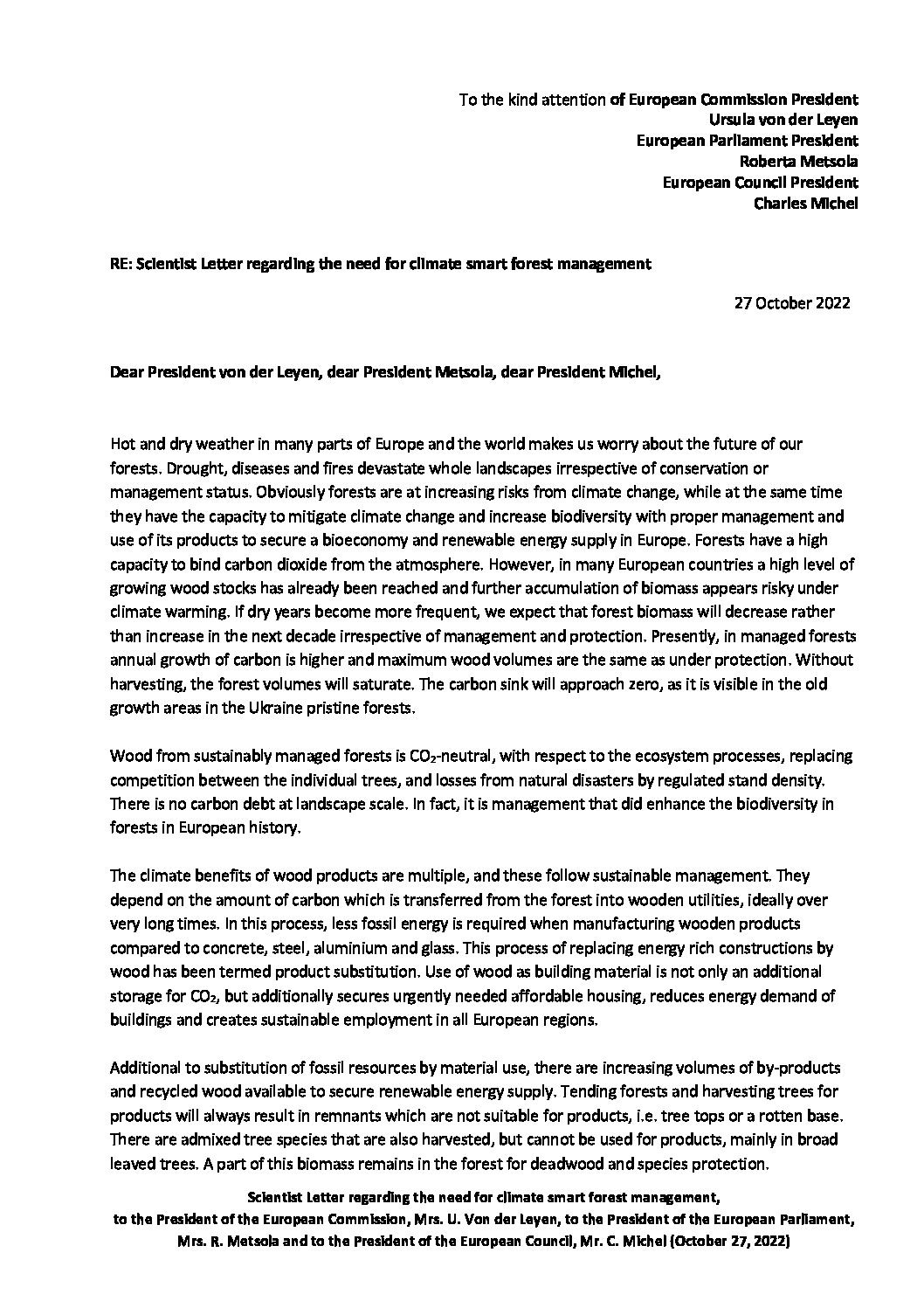
Original document
PDF 334.65 KB
[Bioenergy International]