
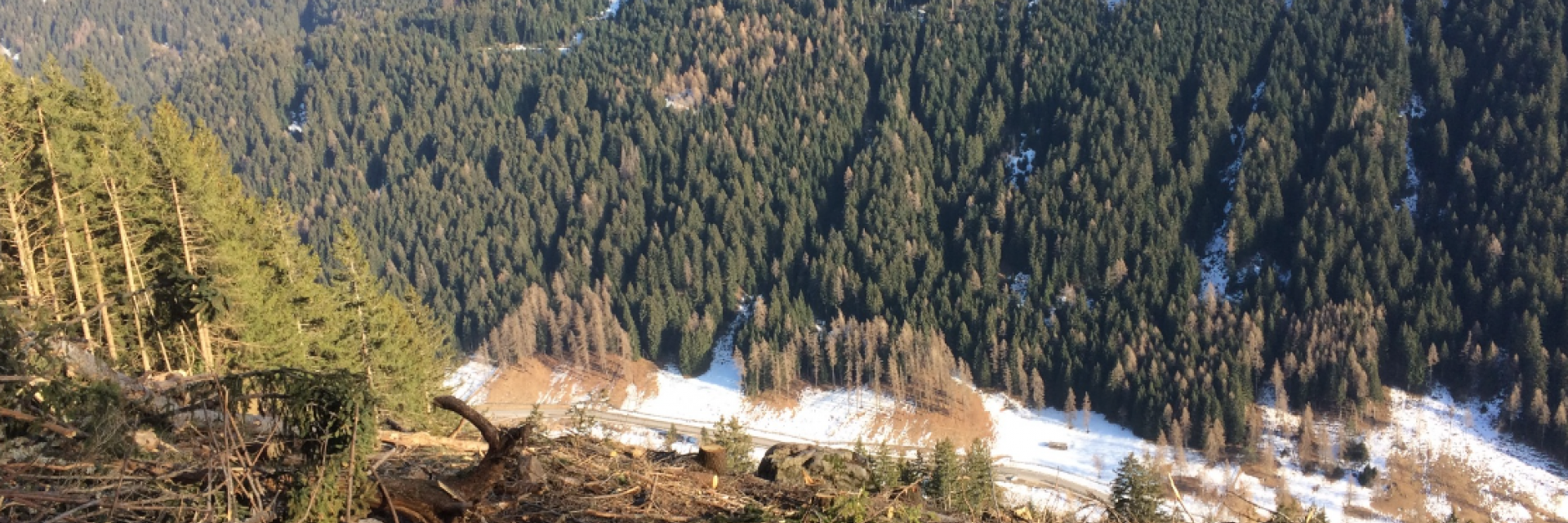
Will today’s forests and Alpine landscapes remain the same tomorrow? Many effects of climate change are already becoming visible in the Alpine regions. Climate models agree that if current management practices do not reverse the trend, high temperatures and low precipitation will be accompanied by extreme weather events and major infestations of insects and other pathogens. Forest owners, community groups, and various visitors are observing this with concern. Added to this are those who process wood and are involved in the protection and preservation of the cultural landscape.
The event “How Can Forestry and Timber Industry Professionals and Civil Society Respond to the Climate Crisis,” organized by the Italian presidency of SUERA Trentino-Alto Adige, aims to address these and other issues by strengthening dialogue among the relevant stakeholders. The various presentations, chaired by Dr. Christian Hoffmann, co-leader of the “Multifunctional Forests and Sustainable Use of Wood” Task Force, brought together representatives from forestry administrations, the furniture industry, researchers, and experts in forestry policy, as well as future generations to extend the dialogue into another dimension.
As Dr. Romano of the Ministry of Agricultural, Food, and Forestry Policies has emphasized, the complexity of the climate crisis requires that the various countries participating in the EU Strategy for the Alpine Region (SUERA) incorporate policies into their forestry strategies that can support the adaptation of forest ecosystems and the relevant stakeholders to changing local conditions.
As Dr. Unterthiner of the Forestry Department of the Autonomous Province of Bozen/Bolzano pointed out, the medium- and long-term goal must be to cultivate adaptable and resilient forests with the support of European funding for the forestry sector. These activities must also be carried out in harmony with other strategic documents on sustainability and be included in the action areas of the Forest Agenda 2030.
According to Dr. Brandl of the Bavarian Forest Research Institute, the activities described above have demonstrated the need to provide forestry experts and civil society with scientifically sound and practical tools. In light of upcoming climate change, the goal is to make recommendations on the selection of future tree species to be planted in order to better manage and communicate forest adaptation challenges. Consequently, the climate analogies model was presented as a decision-support tool for identifying regions where future climate conditions for specific Alpine sites are already a reality. Combined with data from forest inventories of the sites to be evaluated, and based on a set of information, a potential composition of tree species based on their climatic characteristics is suggested for adoption in future forest management.
The changes currently underway will have a significant impact on the downstream forest supply chain, noted Angelo Marchetti, president of Assolegno-Federlegno. To this end, appropriate legal, fiscal, financial, and economic instruments should be made available to all actors in the forest and wood supply chain to facilitate the role of forestry and the downstream wood processing industry in storing carbon dioxide in wood products in order to mitigate the effects of climate change.
The current geopolitical crisis and the supply insecurity surrounding the most commonly imported wood species were the focus of Andreas Kleinschmit’s presentation. He emphasized the need to focus on the utilization of lesser-known tree species and to drive a new wave of product and technological innovation in both structural and non-structural products. It is also important to highlight the shift from a linear economic model to a multidimensional and circular economic model. Combined with the harmonization of standards and regulations, the circular economy should also be pursued more actively in the SUERA regions.
Ariane Benedikter responded to these calls as a young representative of the future civil society. She affirmed the importance of forests’ ecosystem services and emphasized her personal commitment to forestry. Furthermore, she highlighted the personal enrichment that comes from direct participation and how crucial it will be in the years ahead: striking a balance between resilience and sustainability, empowering young people on this issue, and involving women more in the dialogue, while enabling active participation in identifying climate change goals.