
Reading time: 6 minutes
Founded in Geneva in 1996 under the auspices of the Council of Europe, FEDRE has always focused on cross-border regions. In 2023, it formed a partnership with Crédit Agricole next bank to study the border effect along Switzerland’s periphery in various fields, some of which go unnoticed by the general public. Following the first issue, which addressed food aid, the Founded in Geneva in 1996 under the auspices of the Council of Europe, FEDRE has always focused on cross-border regions. In 2023, it formed a partnership with Crédit Agricole next bank to study the border effect along Switzerland’s periphery in various fields, some of which escape the attention of the general public. Following Issue 1, which addressed food aid; Issue 2, which explored challenges in the healthcare sector; Issue 3, which presented a vital topic for our regions—water; Issue 4, focused on culture; Issue 5, addressing the sensitive issue of who compensates unemployed cross-border workers; Issue 6 focused on the idea of creating a cross-border resident card, Issue 7 addressed sustainable mobility in cross-border urban areas, this issue is devoted to the European aspects of cross-border cooperation, Issue 8 is dedicated to the European aspects of cross-border cooperation, Issue 9 to the diversity of direct taxation systems for cross-border workers, Issue 10 to the difference between Switzerland and its neighbors in counting the unemployed, Issue 11 on sustainable transport infrastructure planning in border regions, Issue 12 on the contribution of culture to building a shared cross-border identity, Issue 13 on the growing importance of border phenomena and the changing role of borders, and here is Issue 14 on the role of sports in cross-border relations.
A cross-border regional identity can only be forged on the basis of shared experiences. We must not rely on empty words or grand declarations, but rather focus on concrete, everyday realities… This is where sports can play a role. For the effort we put into ourselves, competition with others, and the satisfaction of shared emotions are the driving forces behind “living together” in a given region. We know this is possible at the national level, at the local level… but is it also possible at the cross-border level?
A few examples, though on a limited scale
Every December, Geneva hosts the Course de l’Escalade. This popular event, open to everyone regardless of age, has achieved massive success: 57,000 participants in December 2024. Admittedly, it is rooted in the commemoration of a conflict, “L’Escalade” of 1602, during which the people of Geneva successfully repelled an assault by the troops of the Duke of Savoy. The regional aspect is undeniable today; however, French participants are in the minority, accounting for about 25%. The Interclub ranking was won in 2023 by Athlé de Saint-Julien-en-Genevois (Haute-Savoie) ahead of Athlétisme Viseu Genève, with the order between the two clubs reversing in 2024. The Geneva Marathon, held in May, attracted 22,000 participants in 2024, with a more even split between French and Swiss runners. But is a single event per year—even a major one—enough? Of course not. Let’s look at some other examples.
Servette Rugby Club, founded in Geneva in 2014, competes in the French league. It has even won the French championship three times in various divisions, most recently in 2023, and moved up to the next division in 2024: Nationale 2, which is thefourth tier of the French rugby leagues. As of late 2024, it was inthird place in its division. Significantly, it was originally called “Servette Rugby Club de Genève” but decided in 2018 to drop the reference to Geneva in order, according to its press release, to better represent “all its supporters in Geneva, but also beyond.” And soccer?
Thonon Évian Grand Genève FC currently competes in France’s Nationale 3 (the fifth tier, featuring amateur players) and plays its home games in Thonon-les-Bains. The club has seen better days; with a professional roster, it reached Ligue 2 in 2010 (before briefly joining the top-flight Ligue 1 in 2012). Its stadium was therefore too small. So, why not play at Servette Geneva’s new stadium (La Praille), designed for major international matches but underutilized and thus facing profitability issues? The French Football Federation (FFF) gave its approval. Alas, the European football governing body (UEFA), through its then-president, Michel Platini, opposed the move, arguing that “the organization of football on a national territorial basis constitutes a fundamental principle and a well-established characteristic of the sport”… As we’ve just seen, the rugby federations disagree!
The Rise of Recreational Sports: An Opportunity for Cross-Border Activities?
Vincent Scalet, director of the sports department for the Canton of Geneva, distinguishes between competitive, organized sports and recreational sports, which are freely practiced and based on each individual’s desire to “get some exercise” wherever they choose. Competitive sports are organized into clubs that are part of national federations, which means that cross-border initiatives can only be limited and sporadic (moreover, age groups for young people differ between France and Switzerland). In contrast, he notes that recreational sports are booming: people walk, run, cycle, and ski close to home, and naturally do not hesitate to cross the border.
The Salève has long been a popular destination for day trips among the people of Geneva, who sometimes even think the mountain is located within their own territory. Marked hiking trails allow visitors to venture beyond the border. In the Jura Arc, the Espace Nordique Jurassien on the French side and Romandie Ski de Fonds have been working together for years to promote the region. And in the Alps, the vast cross-border ski areas are highly attractive, while in Geneva, people have long been accustomed to skiing in France at nearby resorts. There are many more examples of these practices, which are difficult to quantify but whose momentum is undeniable.
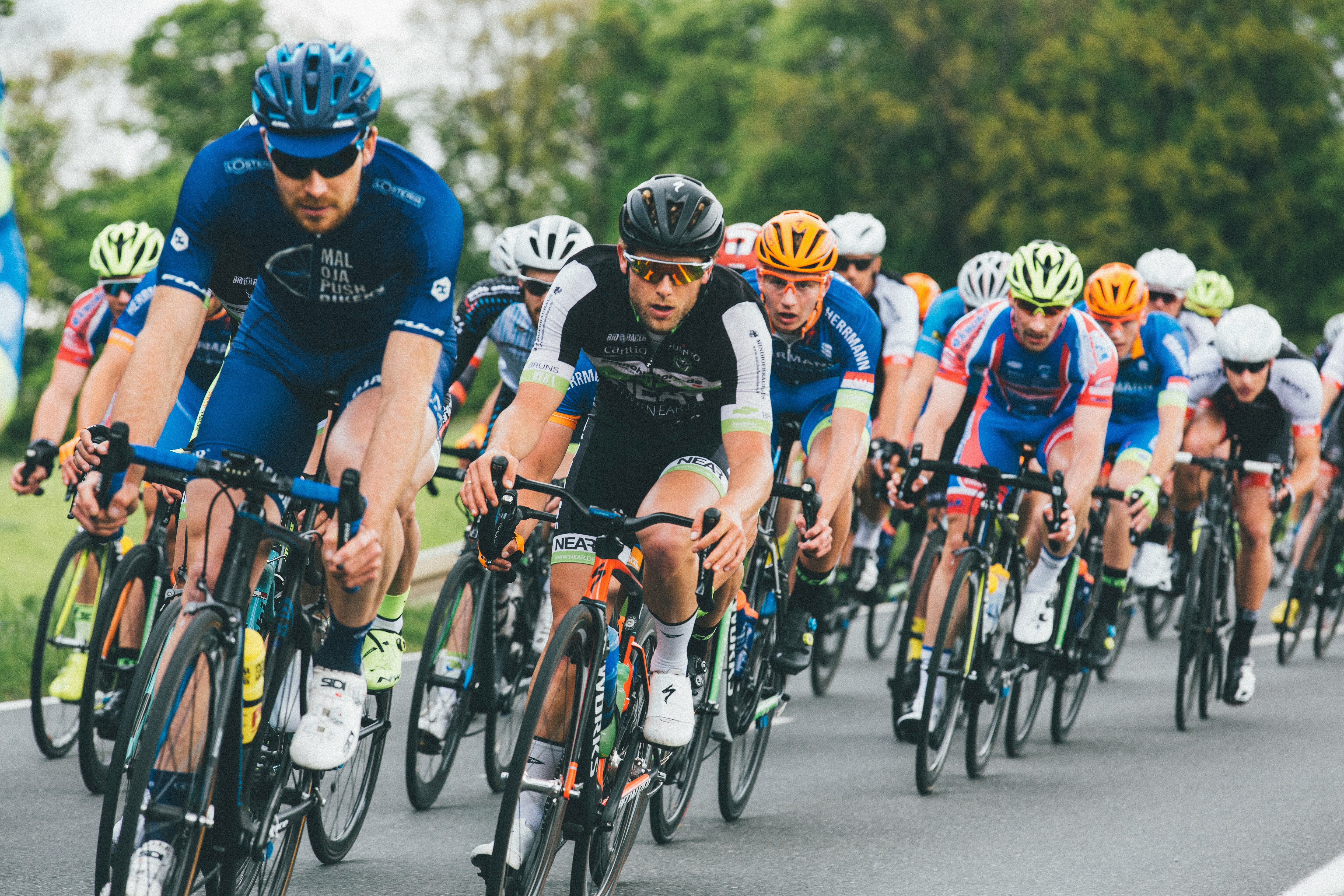
On the other hand, the “Jeux du Grand Genève”—a weekend of sporting events held in June 2016 at various venues on both sides of the border—was not repeated due to a lack of public interest. Should we try to revive them? And couldn’t we consider having the Tour de Romandie riders climb the Salève before the finish in Geneva? It’s certainly an idea worth exploring, as both sports and cross-border relations would stand to gain… political decisions are truly inscrutable!