
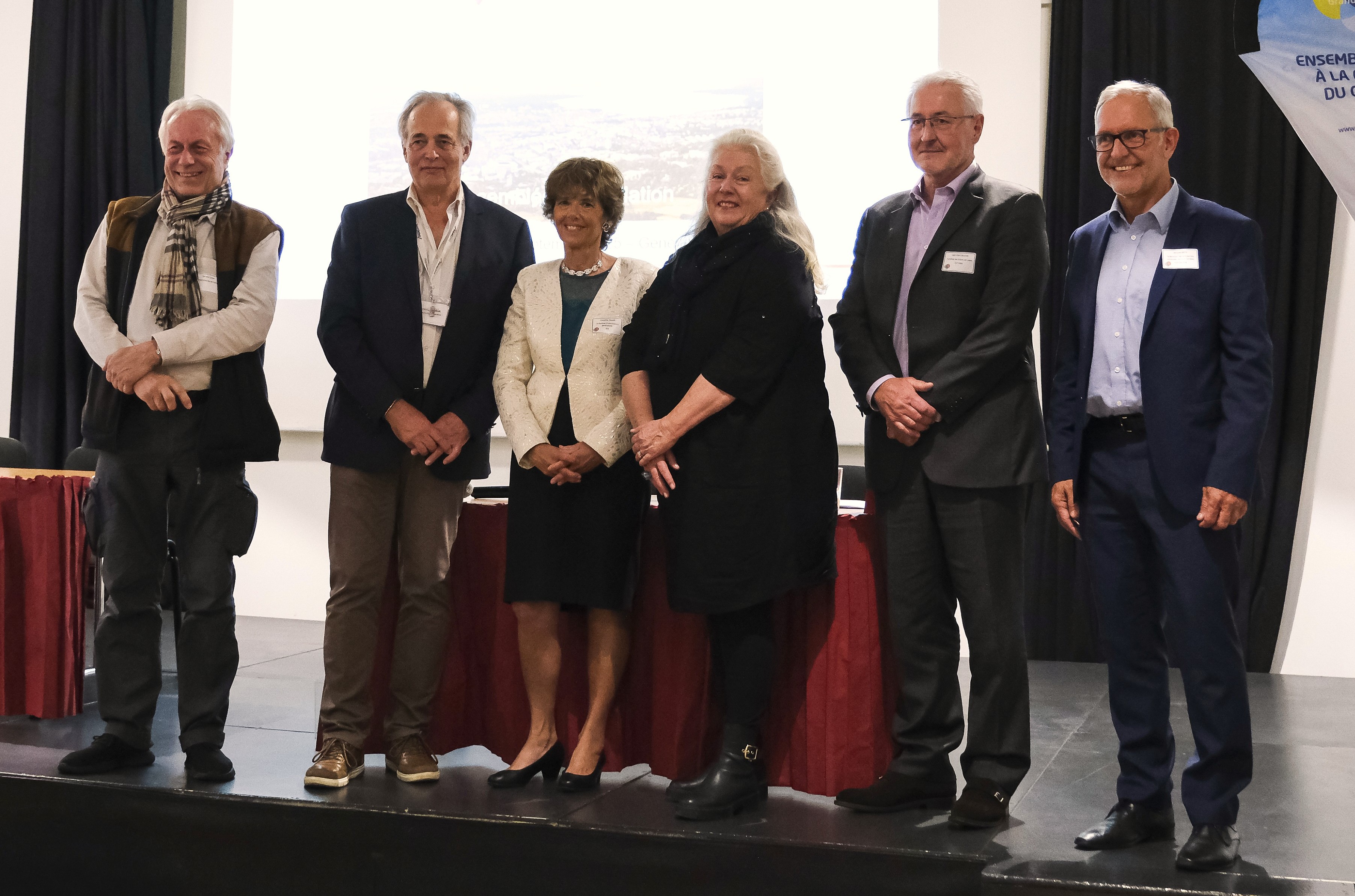
“To live happily, let us live in seclusion,” wrote Florian. But these days, visibility is often seen as an absolute necessity; without it, people might think you don’t even exist. Who has heard of the Greater Geneva Urban Community Forum? Yet this is a one-of-a-kind cross-border body, designed to be the voice of civil society in a region that struggles to connect directly with its residents. It has been in existence for twelve years, so it is time to learn about it and take a brief look at its achievements.
A one-of-a-kind organization
The Urban Area Forum is an advisory body. It bears some resemblance to the Economic, Social, and Environmental Councils (CESER) established in various regions of France to conduct studies and issue opinions. However, what sets it apart is that it fulfills this role in a cross-border context.
And as such, it is one of a kind. There is no real equivalent among other cross-border bodies: neither in the Franco-Geneva region, nor across Lake Geneva, nor in Basel and the Upper Rhine region, nor between Ticino and northern Lombardy. It is the only one of its kind.
An advisory body… and a useful one at that!
From 2013 to 2025, the Metropolitan Forum completed three four-year terms. The fourth term (which will run until 2029) began in September 2025. Each legal entity (NGO, federation, think tank, institute, etc.) that is a member has two representatives (only one of whom has voting rights): a regular member and an alternate. There were 65 NGO members during the third term; there are now 82, which is a clear sign of the forum’s appeal. The Metropolitan Forum is not closed. Applications can be submitted at any time. It is structured into three committees: social and cultural, economic, and environmental.
Since it is not composed of elected officials, it has neither decision-making nor executive authority. Acting in an advisory capacity, it may be consulted by the political body to which it is affiliated—the Local Cross-Border Cooperation Group (GLCT) of Greater Geneva—to seek its opinion on a particular matter. It then forms a committee within its ranks that meets monthly for one or two years, drafts a report that is adopted by its Assembly before being forwarded to the requesting body—which is the standard operating procedure for an advisory body.
More distinctive is the Forum’s ability to take up, on its own initiative, an issue it deems important. This is what it calls its power of “self-referral.” The modus operandi is the same, but it may also reach out to other authorities within the metropolitan area, particularly the Franco-Geneva Regional Committee (CRFG). Its reports are also published (see access to reports).
Concerns that sometimes go beyond the usual
As an initiative of the cross-border civil society, the Metropolitan Forum has developed ideas that go beyond the initial mandate of the Greater Geneva Metropolitan Area (GLCT), which focused on mobility, land use planning, and the environment. These include social cohesion, universal access to healthcare and housing, (very) sustainable mobility—particularly for pedestrians—and the preservation of natural heritage and biodiversity…
He is quick to question the metropolitan area’s growth model and hopes—though the task is daunting—to work toward gradually fostering a sense of local identity by supporting all initiatives that contribute to it.
In the same vein, he calls for a rethinking of how the metropolitan area is governed and for greater democratic accountability. He has also fought for concrete issues, such as the ability for residents of neighboring France to continue receiving Swiss television channels via terrestrial broadcast (DTT), despite a decision to the contrary by the SSR.
A thorough and competent job, with some room for improvement
FEDRE has been a member of the Urban Forum since 2024. To be honest, it did not expect such professionalism in the work of these volunteers from civil society. The outstanding qualities and political experience of the Forum’s current president (the presidency rotates), Olivier Dufour of Geneva, as well as the seriousness and rigor of the general secretariat led by Christelle Pralong, play a major role in this.
For the most part, the organizations (often made up of activists dedicated to a specific cause) avoided the pitfall of engaging in self-serving lobbying within the Forum and were able to contribute meaningfully to a collective effort.
Within the political and administrative bodies of Greater Geneva, the Forum may at times find itself overwhelmed by the sheer volume of its comprehensive reports, which, when added to those produced elsewhere, result in an additional burden of complex texts to analyze. More concise contributions would sometimes be welcome and would carry greater weight.
This brings us to what we consider to be a real weakness of the Metropolitan Forum: its communication strategy toward the general public. While it certainly makes an effort in this area, the media pays it little attention. As a result, it remains largely unknown to residents. Things could already be improved if all the entities that are part of the Forum could help spread the word about its activities to their members—who are sometimes numerous (think of the Federation of Romandy Businesses)—which might create a snowball effect leading to greater visibility, and thus greater legitimacy.
⸻
Founded in Geneva in 1996 in association with the Council of Europe, FEDRE has always focused on cross-border regions. In 2023, it formed a partnership with Crédit Agricole next bank to study the border effect in the regions surrounding Switzerland. Here are the issues published: 1. Food aid; 2. Challenges in the healthcare sector; 3. Water; 4. Culture; 5. Unemployment benefits for cross-border workers; 6. The idea of a cross-border resident card; 7. Sustainable mobility in cross-border urban areas; 8. European aspects of cross-border cooperation; 9. Diversity of tax systems for cross-border workers; 10. Switzerland’s specific approach to counting the unemployed; 11. Sustainable transportation planning in cross-border urban areas; 12. The contribution of culture to a shared identity; 13. The growing importance of cross-border phenomena; 14. The role of sports in cross-border relations; 15. Democracy in cross-border regions; 16. Cross-border forest resources; 17. Cross-border workers’ associations; 18. The future of mobility in cross-border areas; 19. “Greater Geneva”; 20. Agriculture in the Franco-Geneva region; 21. Challenges of the Fourth Industrial Revolution; 22. Comparison of the experiences of Basel and Geneva; 23. Cross-border tourism developments around Lake Geneva; 24. Democratic pact at the cross-border level; 25. Putting people at the heart of “Greater Geneva.”