
Reading time: 4 minutes
Founded in Geneva in 1996 under the auspices of the Council of Europe, FEDRE has always focused on cross-border regions. In 2023, it formed a partnership with Crédit Agricole next bank to study the border effect in the areas surrounding Switzerland across various fields, some of which escape the public’s attention. This is the case with this first issue, which addresses food aid in the French-Geneva region—a pressing issue that remains largely unexplored at this time.
Pockets of poverty that raise concerns
In Geneva, we are justifiably proud that the concept of sustainable development was developed there by the Brundtland Commission, which met at the United Nations between 1983 and 1987. But today, it is becoming urgent to recall that social cohesion is one of the three pillars that define sustainable development (the other two being the environment and the economy). For the situation is alarming.
Out of Haute-Savoie’s 835,000 residents, 23,000 people rely on food aid, while 14,000 people are in the same situation in the Canton of Geneva, which has 500,000 residents—a figure that may surprise many Genevans! – a nearly equivalent proportion of one in 36 people relying on food aid on both sides of the border. An impressive figure.
The remarkable work carried out by the Fondation Partage in Geneva (a food bank founded in 2005) and the Haute-Savoie Food Bank (founded in 1995 and based near Annemasse) is well worth highlighting.
Partage and the Haute-Savoie Food Bank
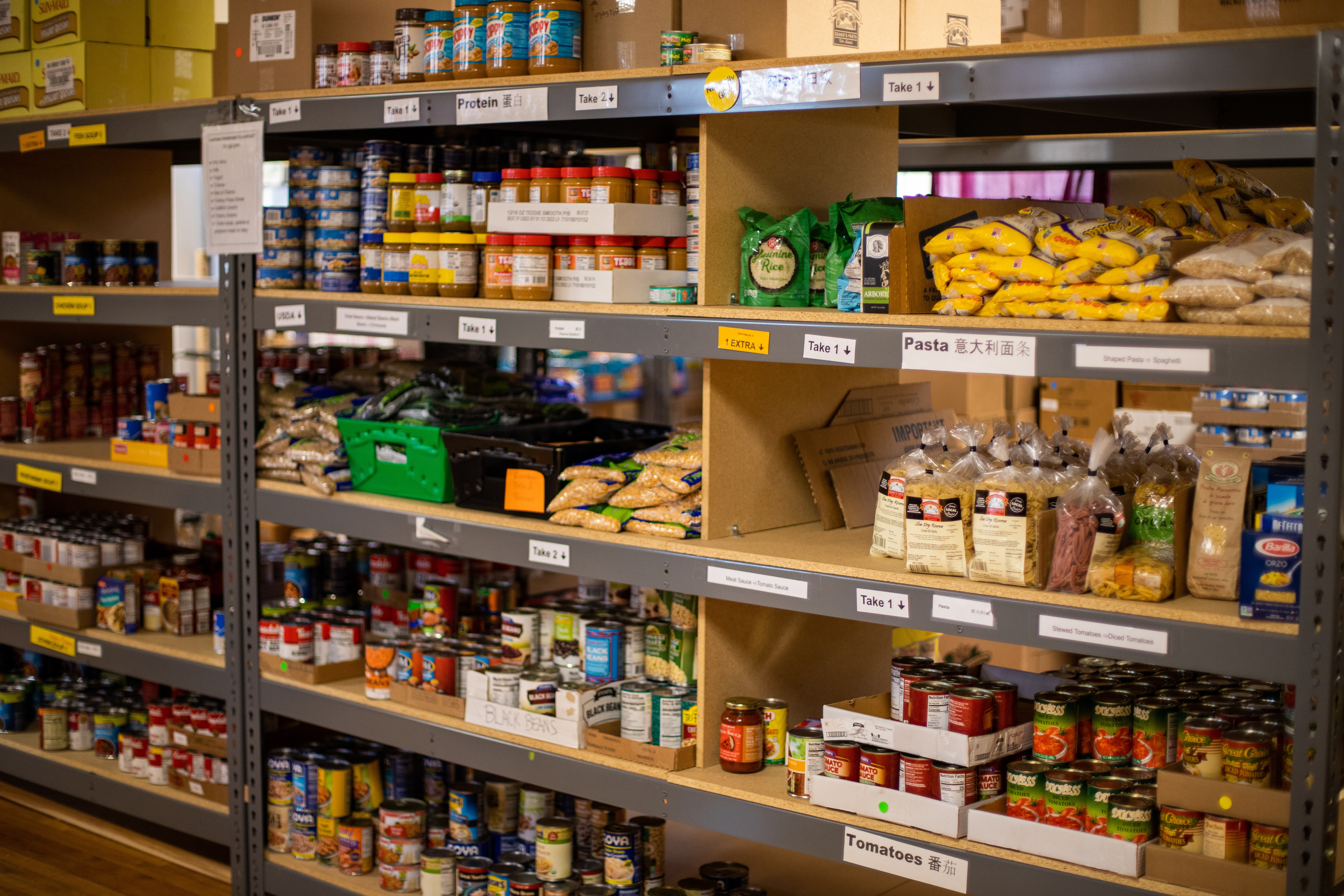
To address this issue, how can we not prioritize tackling the massive amount of food waste generated daily in our societies? This is exactly what two organizations are doing: they have partnered with retailers and supermarkets to collect unsold but still edible food and distribute it to the most vulnerable, typically in the form of meal baskets. To this must be added, in particular, donations from individuals, made for example during the “Samedis du partage” events organized twice a year at “https://samedidupartage.ch” supermarkets.
Further details can be found on the respective websites https://www.partage.ch/fr/ and https://ba74.banquealimentaire.org/
Both the Partage Foundation and the Haute-Savoie Food Bank rely on the support of numerous volunteers and offer vocational integration contracts. Of the Food Bank’s 21 employees, 17 are on vocational integration contracts through Pôle Emploi, and of Partage’s 40 employees, 29 hold solidarity jobs subsidized by the Canton.
Is there a border effect on poverty?
Official figures from INSEE for 2020 show that, on average, approximately 10.5% of people in the Ain department and 9.4% in the Haute-Savoie department live below the poverty line.
However, it is evident that among the 26 municipalities with the highest poverty rates in these two departments, 50% are located in the French Genevois region—that is, in the border area—including Gaillard (24%), Ferney-Voltaire (23%), and Annemasse (22%). There is therefore a very strong correlation between proximity to the border and the poverty rate in the French region bordering Geneva.
How can this be explained? Among the possible explanations, it seems likely that the rise in the cost of living—linked to the “border effect” caused by the large number of cross-border workers earning Geneva-level wages (two to three times higher than in neighboring France)—is one of the causes of the increase in poverty in the border region.
Cross-border cooperation in the field of food aid
The Haute-Savoie Food Bank and the Partage Foundation, both of which are members of the European Food Banks Federation (FEBA), know each other well and collaborate regularly. They even occasionally donate food supplies to one another when they have surpluses, which also allows them to diversify the contents of the meal baskets they provide.
In recent years, particularly since the onset of the pandemic, both organizations have faced a decline in food supplies, even as the number of people relying on food assistance continues to rise. In some cases, we may reach a point where demand can no longer be fully met. It is partly in response to this unprecedented situation that, since 2020, the Haute-Savoie Food Bank has been making some direct purchases on its own—for example, rice, of which it lacks sufficient supplies. One avenue for future collaboration could be to make joint purchases with Partage.
One positive factor worth noting is that there is currently a five-year agreement between France and Switzerland allowing food bank vehicles to clear customs without the usual formalities.
Finally, here’s an anecdote showing that the border area is a functional region that transcends administrative boundaries. The Ain Food Bank, located in Bourg-en-Bresse, does not serve the Pays-de-Gex, which is isolated from the rest of the department by the Jura Mountains. In fact, it is the nearby Haute-Savoie Food Bank that most often operates in the Pays-de-Gex!
********
A message to our friends in the Jura Arc!
The Franco-Swiss Jura Arc supports cross-border projects with grants of up to 100,000 CHF / €
Submission deadline: November 15, 2023
For more information:
Requests should be sent to: fppt@arcjurassien.org