
Reading time: 6 minutes
Founded in Geneva in 1996 under the auspices of the Council of Europe, FEDRE has always focused on cross-border regions. In 2023, it formed a partnership with Crédit Agricole next bank to study the border effect along Switzerland’s periphery in various fields, some of which go unnoticed by the general public. Following Issue 1, which addressed food aid; Issue 2, which examined challenges in the healthcare sector; and Issue 3, which tackled a subject of vital importance to our regions—water—we now turn to the theme of culture: how does it succeed—or fail—in crossing the border?
Culture is much more than just a pastime. All relationships formed between people generate culture and are its products. It is the very essence of life, as has been said. And the former mayor of Lyon, Édouard Herriot, added: “It is what remains when we have forgotten everything.” But what happens when a border divides a territory?
Does the example come from the Upper Rhine?
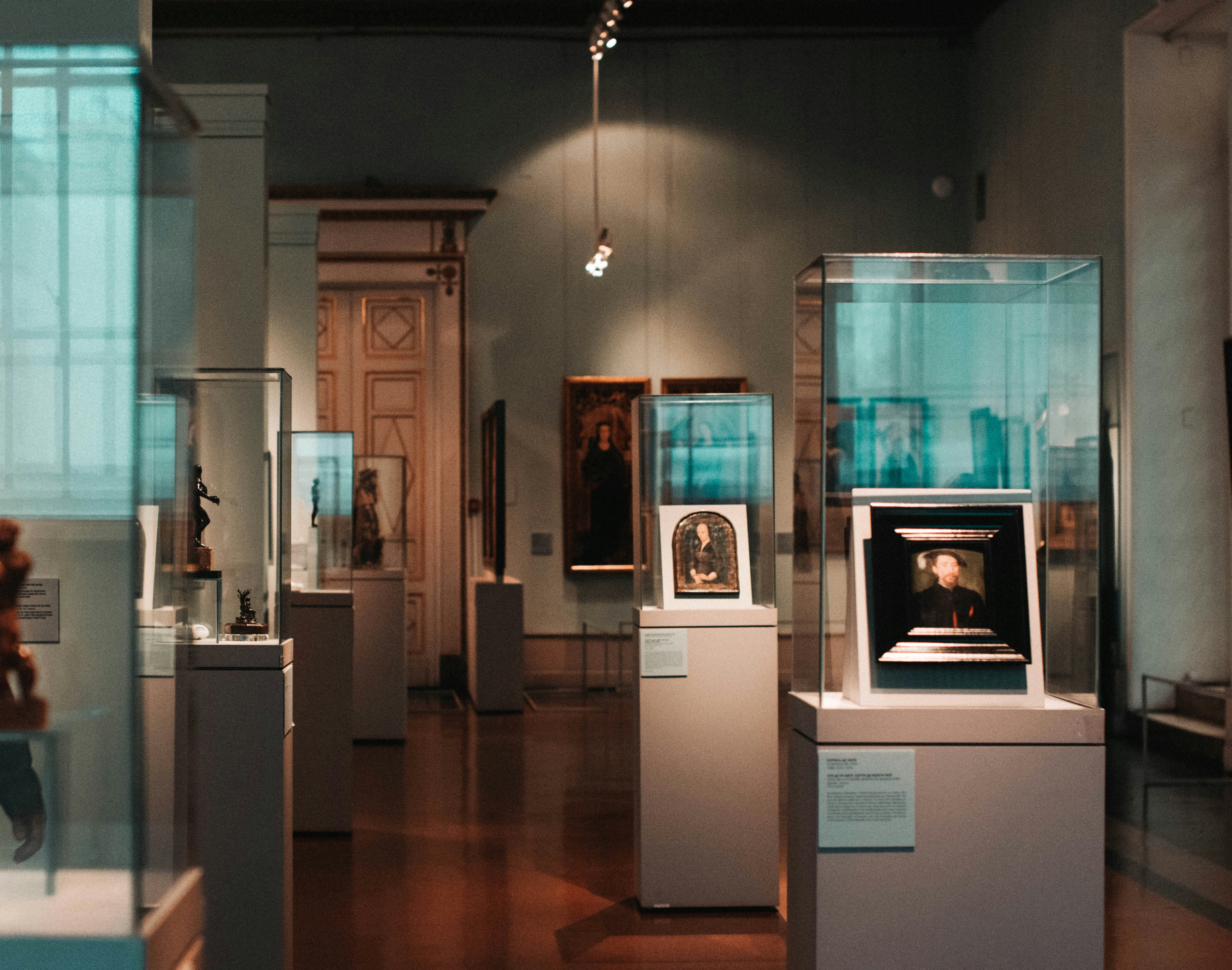
The region known as the “Three Countries” area between Basel, Mulhouse, and Freiburg is doing a lot in this regard. A Museum Pass (Museumspass) has been created there, covering 350 museums, castles, and gardens in France, Switzerland, and Germany, as well as 1,000 exhibitions and temporary events, allowing it to claim the title of “the world’s largest museum ." It is valid for one year from the first visit and costs €150. It can be purchased online and offers free access for twelve months to one adult and five children under 18 to all museums and temporary events within this network, which is not limited to the strictly defined tri-national Rhine region, as it includes, for example, the Centre Pompidou in Metz and the castles of Mannheim in Germany and Thun in Switzerland. You can also get discounts on cultural trips to more distant destinations, such as the one offered in Lisbon in May 2024.
There is also the “Three Countries Museum” (Dreiländermuseum), the only one of its kind in Europe, housed in a former tobacco factory built inthe 18th century in Lörrach, a German city of 50,000 inhabitants located 20 minutes from Basel. Approximately 20,000 visitors per year. Covering an area of 1,000square meters, the museum presents, in an educational and interactive manner, the history of how borders were established in the region and their consequences, the shared traditions of the inhabitants, and how life was organized along the border.
Ferney-Geneva-Coppet: The Enlightenment Region
Voltaire, Rousseau, Madame de Staël, and her Coppet circle (Constant, Sismondi, Necker, and others)—these world-famous pioneers of democracy lived there, in this small stretch of land between Geneva, Vaud, and France. Before achieving success in Paris, Rousseau, a citizen of Geneva, studied in Annecy, Chambéry, and Turin, and later in Lyon. And Voltaire, upon his return from Prussia, settled in Geneva at the Villa des Délices in 1753—where he wrote and published Candide —before acquiring the Château de Ferney in 1759. It was there that Pierre Calas, the son of a Protestant unjustly executed in Toulouse, came to find him and convinced him to write the famous Treatise on Tolerance (1763) at Ferney.
Today, the Villa des Délices and the Château de Voltaire in Ferney, located 5 km apart, collaborate closely across the border. The Villa houses collections that it gladly lends to the Château, which welcomes 32,000 visitors a year. School groups visit both sites. On November 29, 2023, President Macron spent a morning at the Château “to honor our shared Franco-Swiss heritage” during its reopening to the public following restoration.
At auctions, France and Geneva often avoid outbidding each other. Yet the Villa remains largely out of the public eye in Geneva, while the Château, which has been owned by the state since 1999, consequently attracts little attention from local political elites.
2028 will mark the250th anniversary of Voltaire and Rousseau. Couldn’t we use this occasion to organize an event with international impact that would give this cultural heritage the prominence it deserves?
Seeking a new balance around Geneva
In the cultural sector, as elsewhere, there is a persistent imbalance between Geneva and its surrounding region, and a relationship between the center and the periphery that is far from ideal: Geneva pays too little attention to “neighboring France,” while the latter looks too exclusively toward Geneva.
Yet the example of the Paléo Festival in Nyon, founded in 1976, shows that it is possible to achieve great success with an ambitious project right on Geneva’s doorstep. Why, then, not dream of a prestigious cultural project near Annemasse or Ferney? The success of the Léman Express, which makes it easy to reach Annemasse (though it bypasses the Pays-de-Gex), can help restore some balance. Thanks to it, Château-Rouge and the Villa du Parc are seeing an increasing proportion of Genevans in their audiences.
La Villa du Parc is an active member of a “contemporary art network in the Alpine region” called Altitudes, which focuses on current issues related to the mountains and global warming. This network, currently coordinated by Archipel Art Contemporain in Saint-Gervais-les-Bains, is expanding into another area to the east and plans to extend toward the Valais and the Aosta Valley.
“Neighboring France” shouldn’t have its eyes fixed on the Geneva metropolitan area. In the 1980s, Claude Haegi, a member of the Geneva City Council, suggested to the Mayor of Annemasse that instead of being demolished, the roundhouse-shaped locomotive depot could be transformed into a “contemporary art museum for very large-scale works” and become a must-see destination, following the example of the Gianadda in Martigny. He remains convinced that it is through such initiatives that a region can be revitalized. But to achieve this, he points out, it takes a leader with unwavering commitment.