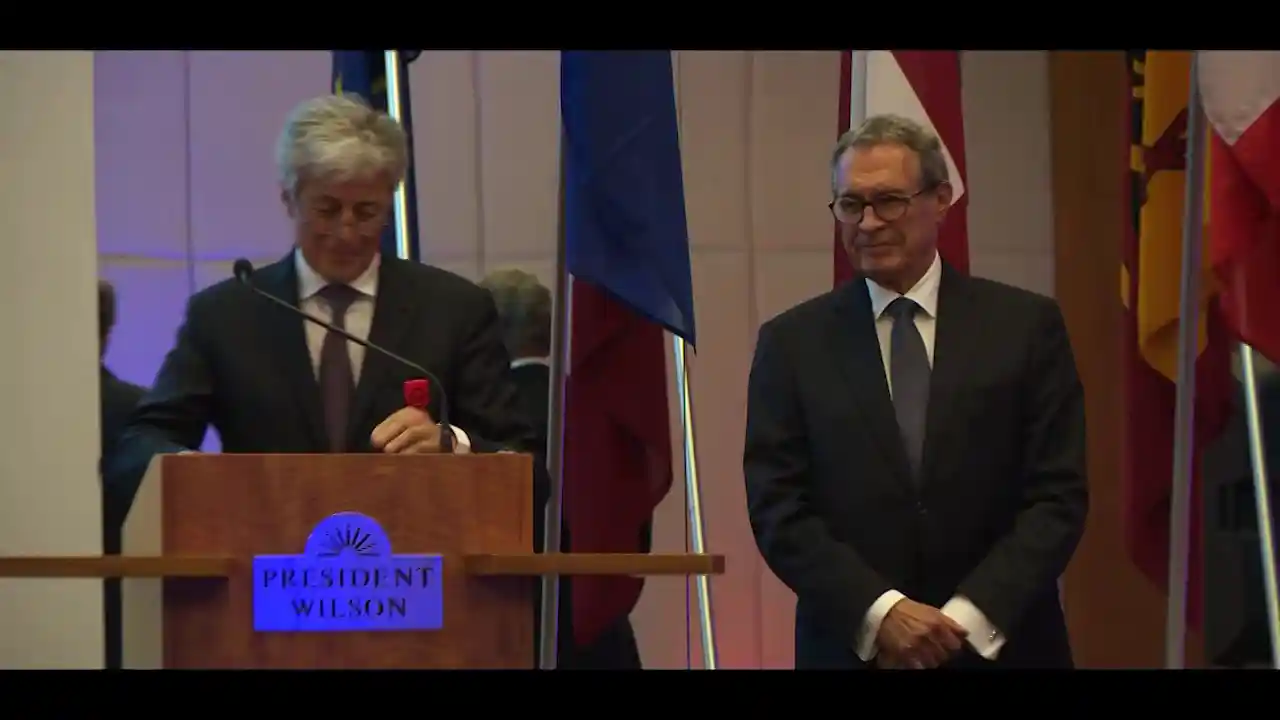
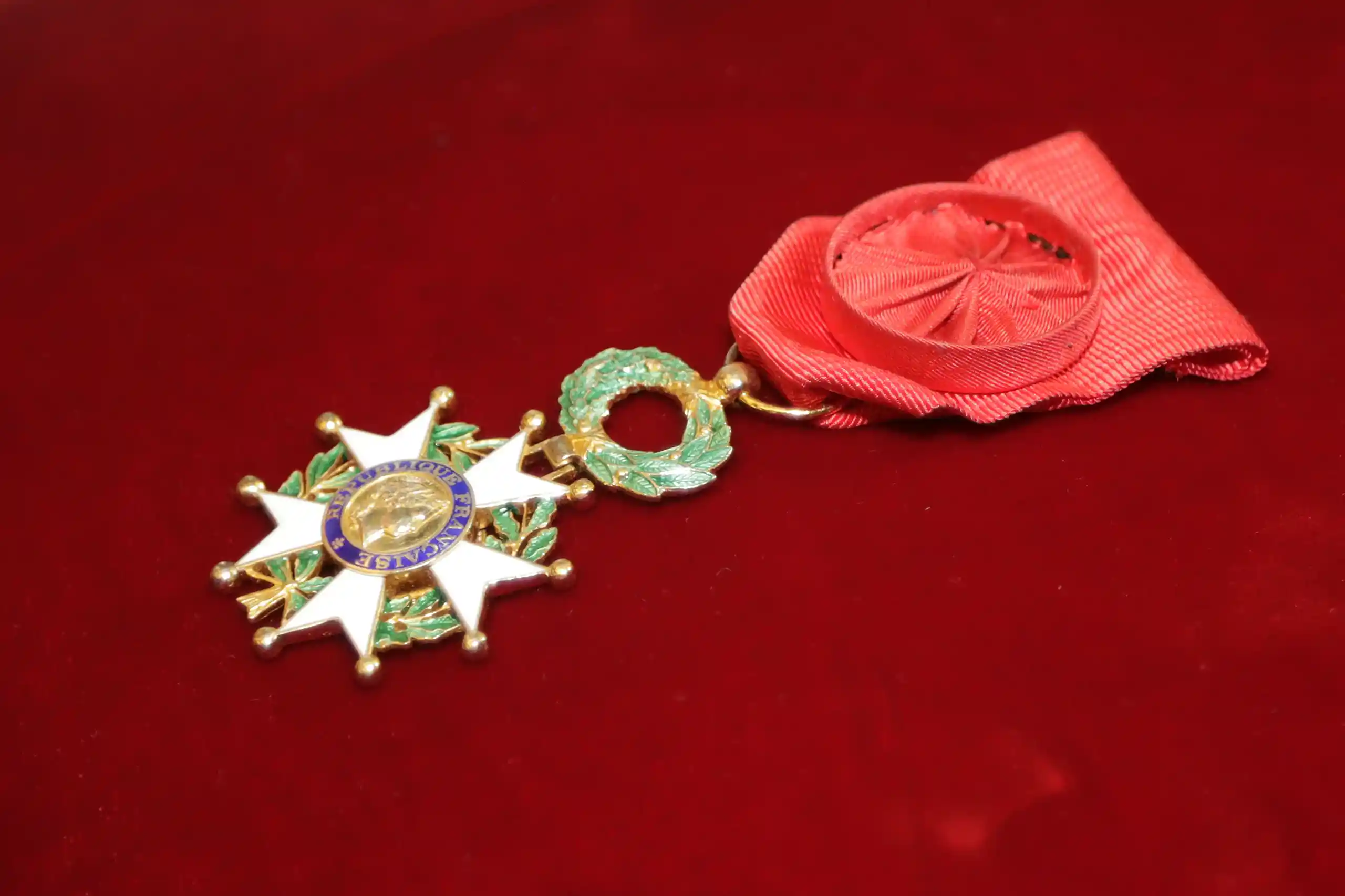
The ceremony at which Regional Prefect Henri-Michel Comet presented Claude Haegi with the insignia of Officer of the Order of the Legion of Honor—which also featured remarks by François Longchamp, President of the Government of the Republic and Canton of Geneva—served as an opportunity to reiterate the need to continue building a large, open Franco-Swiss region that is united, and innovative.
More than two hundred people attended the ceremony, which was held at the Hôtel Président Wilson in Geneva and attended by numerous French and Swiss figures from the diplomatic, political, economic, scientific, and cultural spheres.
In his official address, Regional Prefect Henri-Michel Comet, after highlighting the values embodied by this Officer-level distinction, praised Claude Haegi’s unwavering commitment to fostering dialogue between Swiss and French political and economic stakeholders. He also highlighted the recipient’s numerous initiatives across various fields to promote a region that transcends borders, including the environment, transportation, taxation, and, more broadly, the economy.
Claude Haegi’s response—a true plea for a large, ambitious region characterized by solidarity and a focus on innovation—was largely devoted to human and creative values, as well as to the preservation of the natural heritage of this exceptional area.
Emphasizing the importance of a deeper mutual understanding as well as the need for a better cross-border balance, the candid and optimistic speech did not shy away from the difficulties. He highlighted major positive contributions from France, particularly those that have enabled Geneva to preserve significant natural areas by pushing the housing of those who work there further away—often across the border—with varying effects.
Or consider the generous gift to Geneva from France via the ATMB (Société des Autoroutes et Tunnel du Mont-Blanc), where Claude Haegi serves as an active director. The construction of the highway by the ATMB on French territory made it possible to abandon the Geneva highway project planned for the canton’s territory, which would have crossed the municipalities of Thônex, Veyrier, and Bardonnex and their vast market-gardening areas… 14 km through fields avoided, and not a penny paid by Switzerland. He added that the Department of Haute-Savoie has taken over the toll for 30 years, so that it remains free and discourages motorists from overloading traffic within the canton. “What a thoughtful gesture!”
Claude Haegi then looked ahead to the technological future of the Mont Blanc Tunnel, highlighting its current safety standards while also advocating for a study on a system that would enable autonomous vehicles to ensure optimal safety by preventing head-on collisions— without requiring the expansion of what would become the last major two-way road tunnel. This is an opportunity to champion the idea of a Mont Blanc Tunnel as a world-class technological showcase and to remain true to the visionary legacy of Horace Bénédict de Saussure! “The operating companies have the financial means to do so.”
This event also served as an opportunity to highlight the both practical and symbolic importance of the Archamps Technology Park, a “gold mine of innovation.” When it was first established, it was conceived as a Euro-Swiss technology park. To ensure its future is not compromised, it must now benefit from governance that provides an appropriate structure to preserve ongoing innovative projects, encourage private investment, and support a true development campus. “Let us not be guilty of failing to create, for this technology park, the framework for a new cross-border phase with an international focus.”
Finally, the speech concluded on a cultural and environmental note, beginning with an idea very dear to Claude Haegi: the construction of “an art center located at the gateway to the International Organizations, designed and managed by France on its own territory, serving as a showcase for its culture and for a Francophonie open to the world.” “This French cultural hub, in the Greater Geneva cross-border region, with its bold architecture, could benefit from an international aura conveyed by the thousands of diplomats and delegates passing through here.”
He noted that it is through the European Foundation for the Sustainable Development of Regions (FEDRE) that it carries out its work. Sustainable development—which provides economic and ecological solutions—has been at its core since its creation in the 1990s and will remain so. Its main concrete initiative today focuses on the French-speaking cantons and the French departments of the Jura, the Lake Geneva region, and the Alps, with a study aimed at promoting the wood sector, from forestry to construction and energy sources. The objective is therefore both environmental and economic.
Conclusion
Claude Haegi’s goal was not to dwell on the honors bestowed upon him, but rather to continue the work he had begun, to look toward the future, and to advocate for new, ambitious projects. “Yes, I love and believe strongly in this great region and its people. My roots are here. I would like to see that, in addition to rational steps, we infuse it with heart so that we can move forward together out of a shared desire. Moving forward together out of a shared desire. That is my conclusion.”