
Founded in Geneva in 1996 in association with the Council of Europe, FEDRE has always focused on cross-border regions. In 2023, it formed a partnership with Crédit Agricole next bank to study the border effect along Switzerland’s periphery. Following Issue 1, which addressed food aid; Issue 2 , the challenges facing the healthcare sector; Issue 3, water; Issue 4 , focused on culture; Issue 5, on unemployment benefits for cross-border workers; Issue 6 focused on the idea of a cross-border resident card, the next on sustainable mobility in cross-border urban areas, Issue 8 dedicated to the European aspects of cross-border cooperation, Issue 9 to the diversity of tax systems for cross-border workers, Issue 10 to Switzerland’s specific approach to counting the unemployed, Issue 11 on sustainable transport planning in border urban areas, Issue 12 on the contribution of culture to a shared identity, Issue 13 on the growing importance of cross-border phenomena, Issue 14 on the role of sports in cross-border relations, Issue 15 on democracy in cross-border regions, Issue 16 on cross-border forest resources, on the 17th: associations of cross-border workers; on the 18th: the future of mobility in cross-border areas; on the 19th: “Greater Geneva”; on the 20th: agriculture in the Franco-Geneva region; on the 21st: the challenges of the Fourth Industrial Revolution; and today, the 22nd, comparing the experiences of Basel and Geneva.
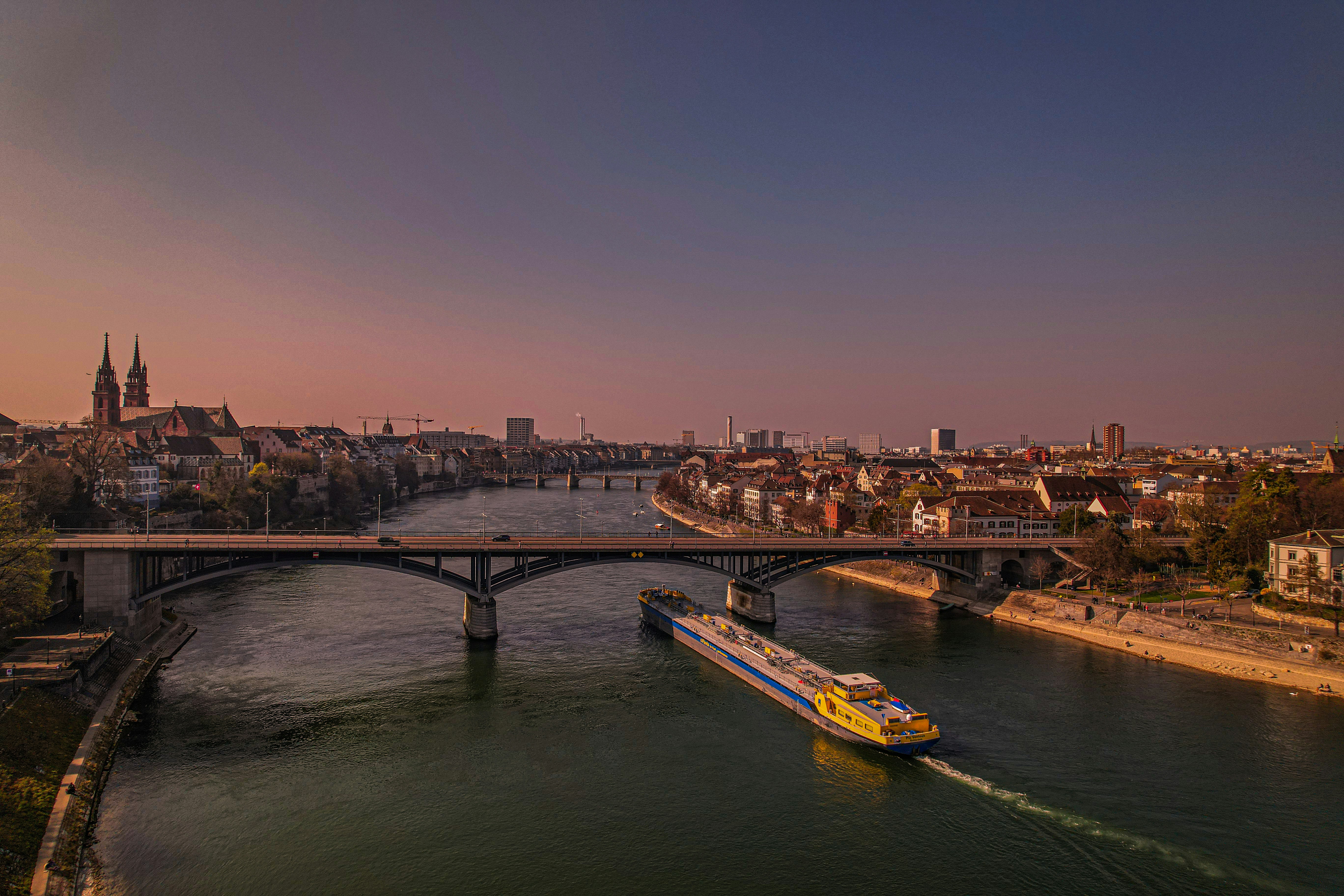
On October 16 and 17, 2025, an event took place that received little media attention but was nonetheless significant: a delegation from Basel and neighboring cantons, as well as from nearby regions in Alsace and Germany (Baden), visited Geneva, all eager to learn more about cross-border relations as they are managed here. It must be said how different the two experiences—those of Basel and Geneva—are, even though they are potentially complementary in many respects, and how necessary it is to talk to one another more often to learn from each other and develop ideas that we would not have come up with on our own.
From Tensions to Cooperation
Two political scientists from the University of Lausanne, Oscar Mazzoleni and Andrea Pilotti, in a collective work published in 2023 under the title National Populism and Borders, identified three distinct clusters in Switzerland that account for two-thirds of the country’s cross-border workers: Geneva, Ticino, and Basel (respectively, according to official statistics, 28%, 20%, and 18%).
It is noted that the “border effect” does not manifest itself in the same way everywhere. Consequently, the Lausanne researchers contrast two models of relations: the “cooperative” type and the “conflictual” type. In Basel, they write, relations appear to be cooperative, and cross-border workers are generally accepted, even appreciated. Conversely, in Ticino, according to the authors, the situation is entirely different, with relations that are clearly conflictual, while Geneva presents a somewhat comparable picture.
Basel: Private economic initiatives are behind this
When it was first established in 1963, the Regio Basiliensis brought together not public authorities from both sides of the border—as was the case in Geneva—but rather businesses, research centers, and chambers of commerce eager to overcome the negative effects of the border. It is a private association under Swiss law. A comparable association was created on the other side of the border in 1965. And little by little, cooperation developed in the “Upper Rhine” region, this time under the responsibility of the public authorities (cantons, Länder, regions, and departments, as well as the state) of the three countries involved. In a smaller area around Basel, a “trinational Eurodistrict” was created in 2007. The Regio Basiliensis, for its part, was entrusted with coordinating the cross-border policies of the cantons of Basel-Stadt, Basel-Landschaft, Aargau, Solothurn, and Jura (following a model that also inspired the Swiss Jura Arc, where an association based in La Chaux-de-Fonds coordinates the cross-border policies of Bern, Jura, Neuchâtel, and Vaud).
When you look at who belongs to the Regio Basiliensis (it should be noted that this is a private association), it’s immediately clear what sets this initiative apart from what’s happening in Geneva: the Basel-Mulhouse-Freiburg Airport, the European Institute at the University of Basel, the University of Mulhouse, regional companies such as Novartis and Hoffmann-La Roche, banks like Julius Bär, Vontobel, and Crédit Agricole next bank, the Basel-Basel Chamber of Commerce, the Franco-Swiss and German-Swiss Chambers of Commerce, the insurance company Helvetia, the Manor department store chain, and even the Basel Zoo!… These are just a few examples, selected at random.
Geneva: Public authorities, starting with cross-border workers
Cross-border cooperation began with the issue of cross-border workers, following the 1973 retrocession agreement with the French municipalities of residence and the subsequent creation of the Franco-Geneva Regional Committee. Its members include the French government and the two departments of Ain and Haute-Savoie, as well as the cantons of Geneva and Vaud. In 2013, the “Greater Geneva” metropolitan project was added.
Everything revolves around public authorities, despite attempts (within the Urban Community Forum) to involve “civil society” actors. The private sector remains on the sidelines, and there is no equivalent to the Regio Basiliensis. Commuters and mobility, followed by the metropolitan project, are at the heart of the Geneva experience and define its strengths and weaknesses.
Two models, each with its own logic
Not that these issues aren’t important elsewhere. For instance, the people of Basel envy us the Léman Express, which runs 24/7, and our various tram and “light rail” projects. On the other hand, unlike their Basel counterparts, Geneva-based entrepreneurs create very few jobs across the border, and the cross-border phenomenon (which has tripled over the past 20 years) remains at the heart of a problem characterized by the fact that jobs are created in Geneva without being able to house a significant portion of the people who fill them (one in four jobs is held by a cross-border worker, with a concentration in the health, retail, services, and restaurant sectors).
In Basel, there are two borders, and perhaps this helps avoid a head-to-head dynamic marked by a center-periphery relationship whose flaws are hard to erase—as the questionable term “Greater Geneva” aptly illustrates. With three parties involved, however, it is necessary to reach an agreement from the outset, which creates a rather different atmosphere over time. Thus, there is no “Greater Basel” but rather a “Trinational Eurodistrict” (itself part of an “Upper Rhine Metropolitan Region” with 6.3 million inhabitants). It is based on a collaboration that, from the outset, has been less focused on cross-border commuters and more concerned with creating a space for regional economic development.