

From now until the end of February 2023, discover a new exhibition at the Geneva Museum of the History of Science. Titled “The Mountain: A Scientist’s Laboratory,” it traces the history of 18th-century researchers who conducted their experiments at high altitudes.
What draws a scientist to the unique world of the mountains? Why would a scientist attempt to climb the highest peaks? What measurements and experiments can be conducted there?
The exhibition explores the connection—which has been developing since the 18th century, particularly in Geneva—between the mountains and humankind, with the aim of gaining a deeper understanding of the mechanisms that govern our world.
This process of taming a hostile and dangerous world began with observations and accounts from pioneers as early as the 17th century, but it was the Age of Enlightenment that truly opened the doors to the exploration of “glaciers” and high-altitude regions—and more specifically, Europe’s highest peak, Mont Blanc. The world of mountains became fashionable. Everyone took to collecting rocks, crystals, and other curiosities, or even attempting to follow in the footsteps of the scholar Horace Bénédict de Saussure, sometimes forgetting his scientific purpose to focus on the athletic feat. The measurements taken became established as scientific classics and helped develop explanatory models for various phenomena, ranging from the study of mountain folding to an understanding of atmospheric physics.
This adventure, which dates back more than two centuries, continues to this day, as the alpine ecosystem remains a valuable laboratory for understanding climate change.
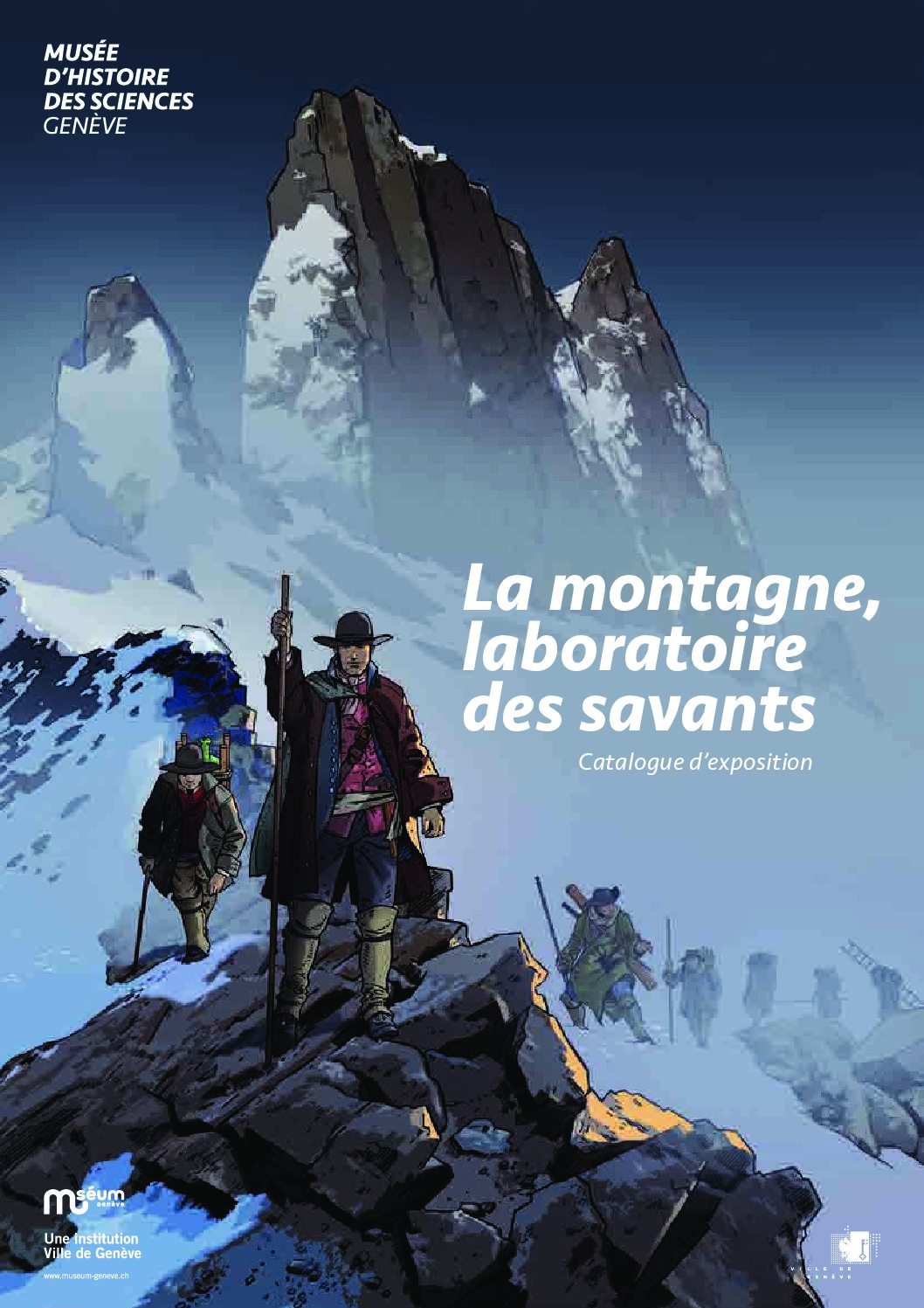
Exhibition Catalog
PDF 5.82 MB